
#19 — Try Square / Winkelmaß
Try Square — The Enduring Right Angle of 3 Centuries of Woodworking
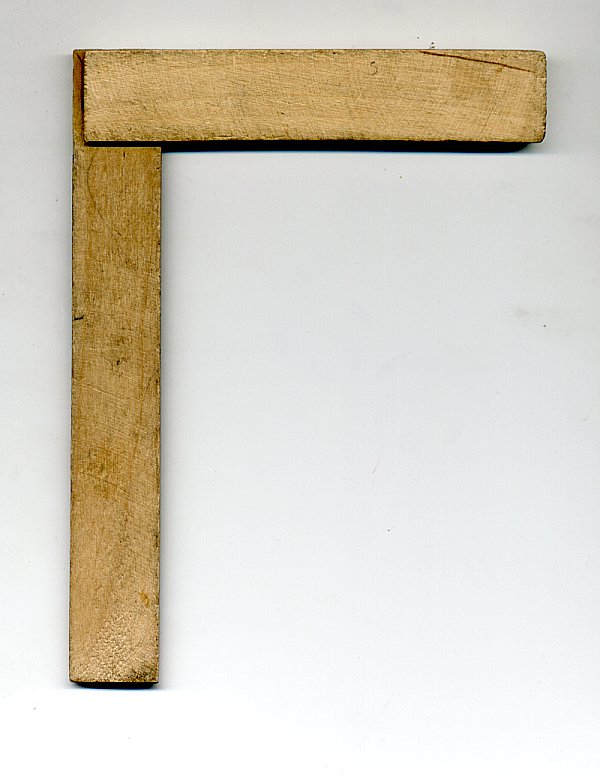
The try square is the enduring right-angle reference of every woodworking and joinery workshop — a hardened steel blade set at exactly 90 degrees to a wooden or metal stock, used to test faces and edges for squareness, mark layout lines perpendicular to a reference edge, and verify the accuracy of every joint before and after cutting. Without the try square, there is no reliable reference for any other layout tool; with it, squareness is transferred consistently from the reference face to every surface and joint in the job.
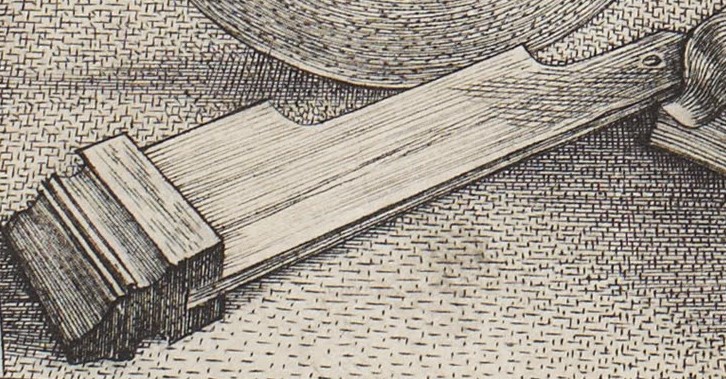
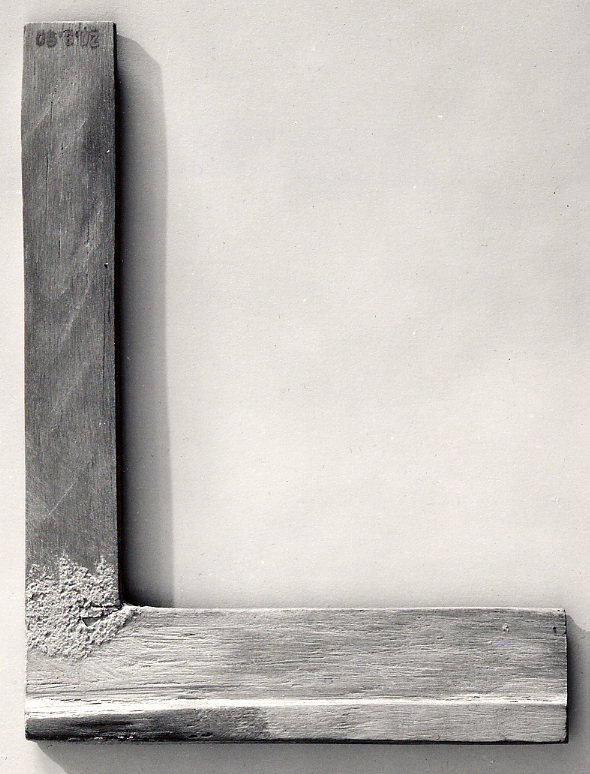
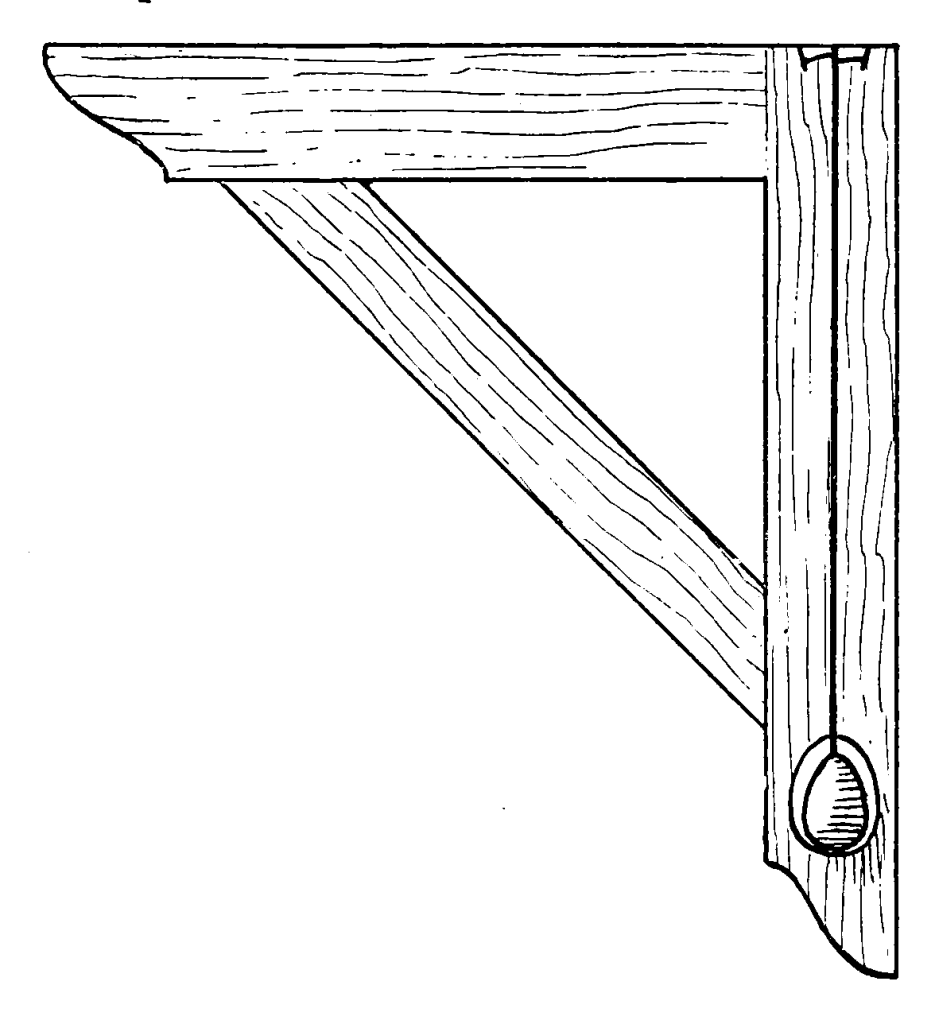
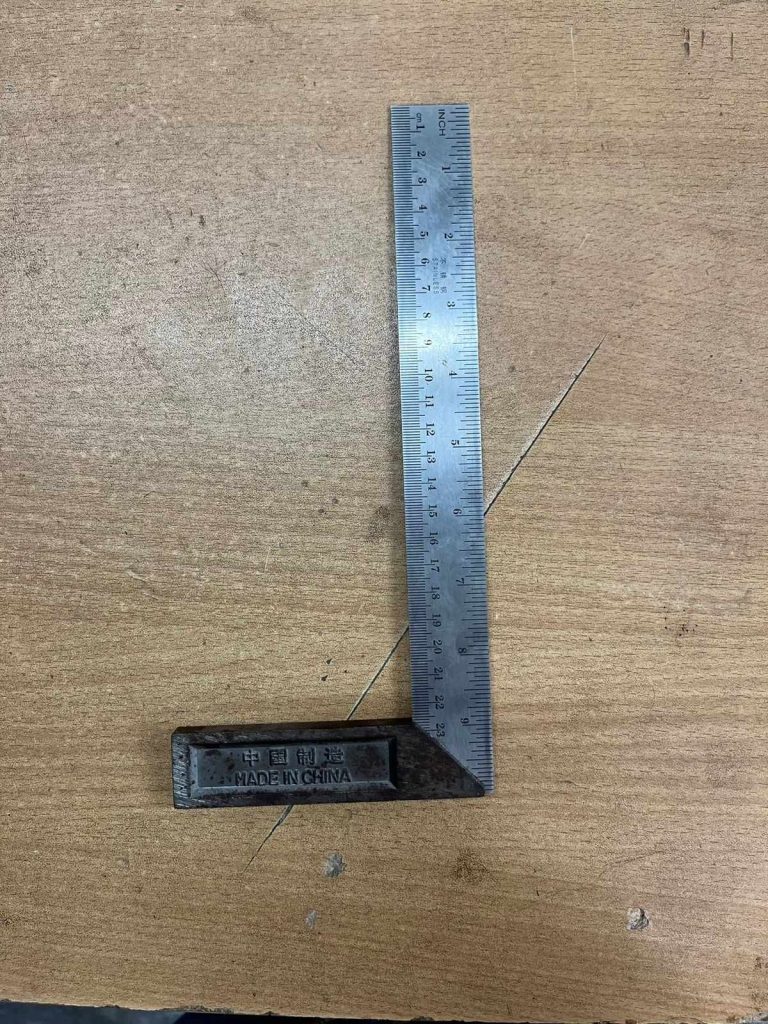
History of the Try Square
The try square has been attested from antiquity — right-angle references appear in Egyptian, Greek, and Roman woodworking contexts, and the principle of the fixed right angle as a layout and testing tool is as old as deliberate joinery itself. As noted in Wikipedia’s try square article, the tool’s essential geometry has remained unchanged across three thousand years: a blade set at 90 degrees to a stock, registering against a flat reference surface.
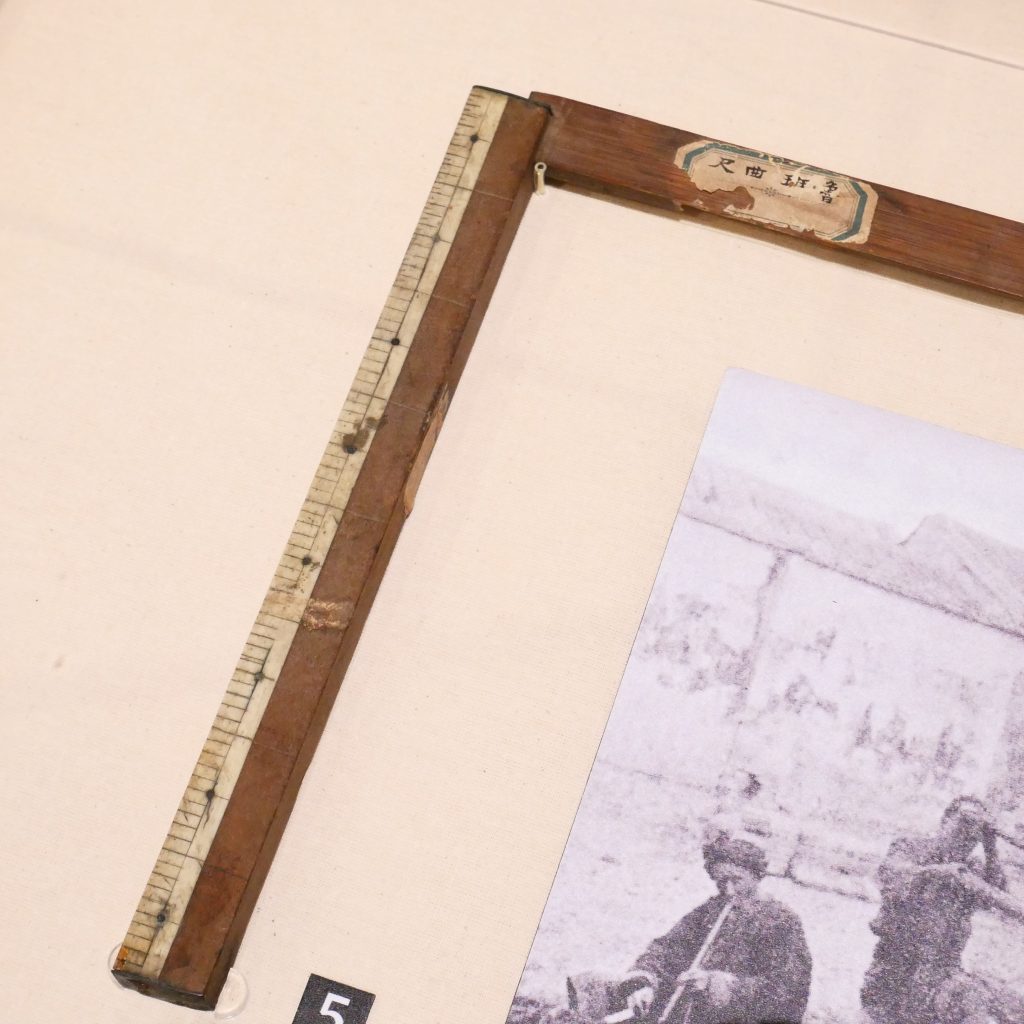
What changed over the centuries was the precision of manufacture and the materials: wooden-stocked try squares with hand-filed blades gave way to all-metal squares with hardened and ground blades in the 19th century, and the Sheffield tool trade produced try squares of progressively higher accuracy as joinery and cabinetmaking standards increased.
The engineer’s square — an all-metal version ground to higher tolerances — served metalworkers and instrument makers; the joiner’s try square, with its wooden stock, remained the standard in woodworking workshops because the wooden stock resists marking and sliding on the reference face.
How the Try Square Works
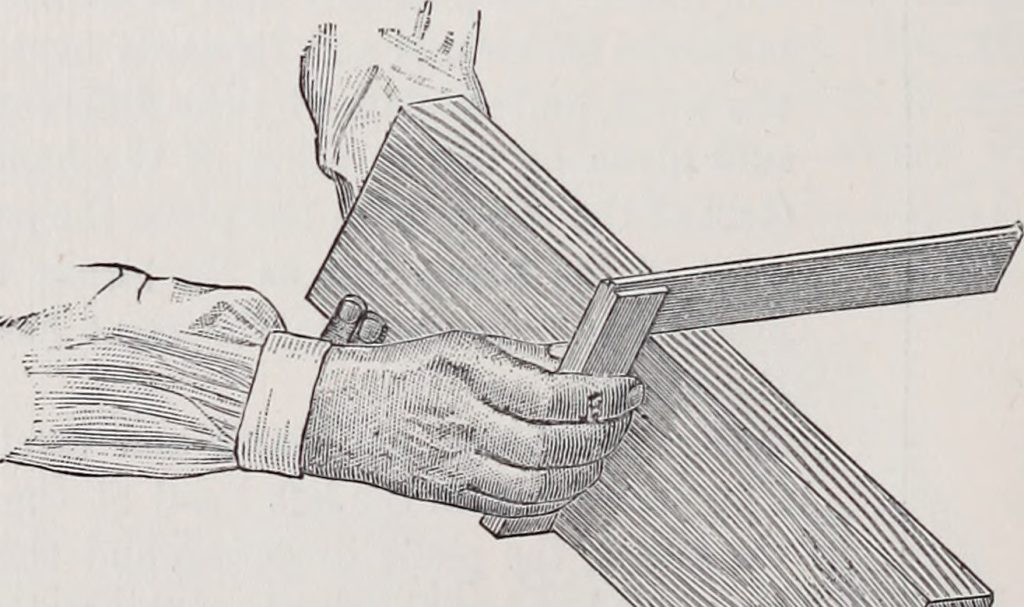
The stock of the try square is pressed firmly against the reference face — the face that has been planed flat and true first, from which all subsequent layout operations are referenced. The blade then stands perpendicular to that face, and any line marked along the blade is guaranteed to be at exactly 90 degrees to the reference.
For testing squareness, the craftsman holds the stock against the reference face, rests the blade against the surface being tested, and holds both toward a light source: any gap between blade and surface reveals the degree and direction of error. A square face shows no gap anywhere along the blade.
This test — stock against reference, blade against surface, held to the light — is the fundamental accuracy check that every joiner performs on every piece before proceeding. Transferred to layout, the try square guides the marking knife across the grain to scribe tenon shoulder lines, dovetail baselines, and rebate edges with absolute confidence that the line is square.
The Try Square as the Foundation of Joinery Accuracy
Every joint in a hand-joinery workshop depends on the try square as its accuracy reference. Mortises are laid out square to the face edge; tenon shoulders are knifed square to the face side; dovetail baselines are scribed square to the end grain; rebate lines are marked square to the face. Without a reliable 90-degree reference, every subsequent layout operation introduces error, and errors in layout compound into errors in fit.
The try square is the tool that establishes the reference from which all others follow. See also the Marking Knife — No. 18, which scribes the lines the try square guides, and the Marking Gauge — No. 17, which scribes the parallel lines that the try square’s cross-grain lines intersect at every joint corner.
Try Square Sizes and Selection
Try squares are produced in a range of blade lengths, from 150 mm for cabinet and instrument work to 300 mm or longer for joinery and carpentry. The smaller sizes give better access to confined areas and finer work; the larger sizes sweep across wider boards in a single registration.
The accuracy of a try square can be verified by marking a line along the blade, flipping the square, and checking whether the blade aligns with the line from the other side — any deviation reveals the error in the right angle. A quality try square should show no visible gap in this test. Vintage try squares from Sheffield makers — Rabone, Marples, and others — are still in daily use in hand-tool workshops and often exceed the accuracy of modern budget alternatives.
The Try Square Today
The try square remains a timeless, essential reference tool in every hand-tool woodworking and joinery workshop. No joint is laid out, no face is prepared, and no assembly is checked without it. The 90-degree angle it embodies is the foundation of all rectangular construction — and the try square is the only tool that verifies it by hand.
Definition
A precision right-angle tool consisting of a wooden or metal stock and a hardened steel blade set at exactly 90 degrees. Used to test faces and edges for squareness, mark layout lines perpendicular to an edge, and check the accuracy of joinery. The fundamental reference tool in any woodworking shop.
Terminology
| German | Winkelmaß / Anschlagwinkel |
|---|---|
| English | Try Square / Bench Square / Engineers' Square |
Regional Variants
EN: Try square, Bench square, Engineers' square — DE: Winkelmaß, Anschlagwinkel, Schreinerwinkel — FR: Équerre — NL: Winkelhaak — SE: Vinkelhake — DK: Vinkelhage
Professional Users
Joiners, cabinetmakers, carpenters, furniture makers, pattern makers
Period / Era
Attested from antiquity; in continuous use in woodworking and joinery to the present day
Available as an archival print — Heritage Tools Archive Vol. 02 — Joinery Tools