
#02 – Drawknife
Drawknife Green Woodworking — The Rugged Blade Behind 6 Traditional Crafts
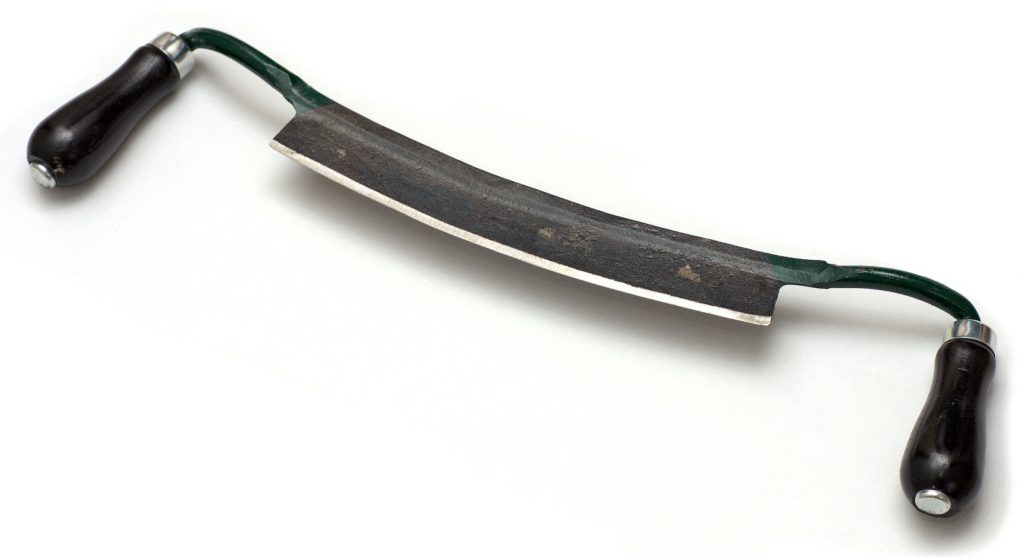
Drawknife green woodworking is the rugged art of shaping and tapering wood with a two-handled blade pulled toward the body — the most direct, responsive shaping method in the traditional craftsman’s repertoire. In drawknife green woodworking, no other tool removes material as quickly or as precisely along the grain. Pull it toward you. Let the wood decide where to go.


History of Drawknife Green Woodworking
The drawknife has been attested since the medieval period and reached peak use in the 17th through 19th centuries in coopering, chairmaking, shingle making, and basket weaving. As documented in Wikipedia’s drawknife article, drawknife green woodworking was found in virtually every rugged pre-industrial workshop working with green or unseasoned wood.
How Drawknife Green Woodworking Works
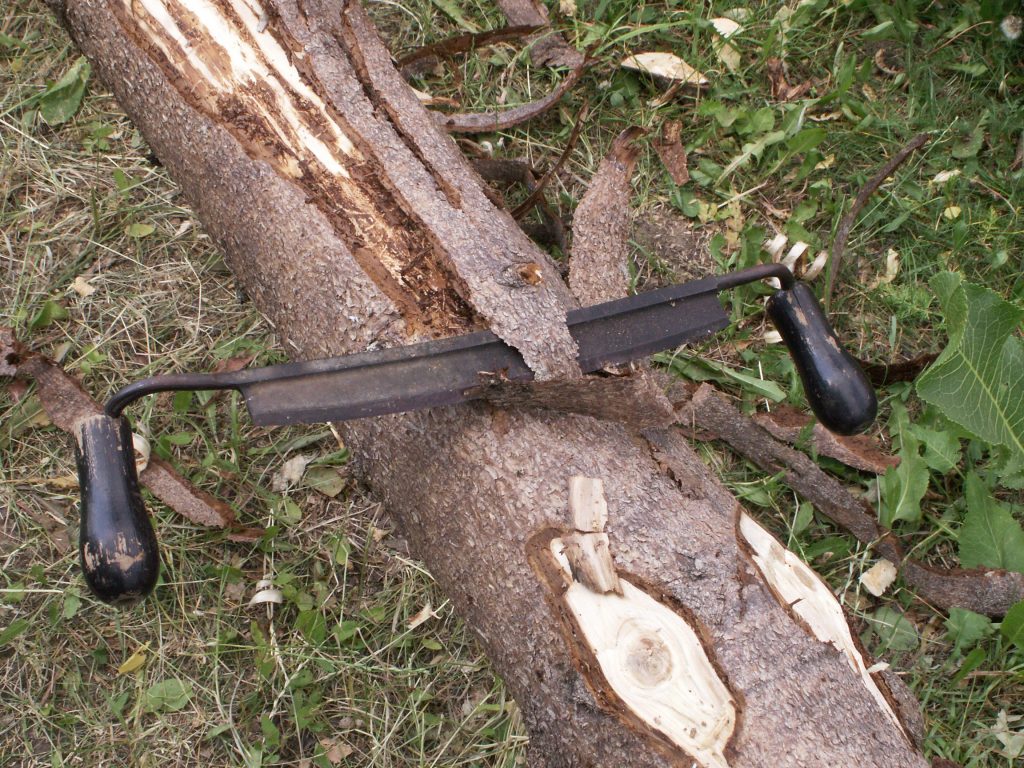
The craftsman grips a handle in each hand and draws the rugged blade toward the body — the bevel angle controls depth of cut. Used bevel-down for aggressive drawknife green woodworking shaping, bevel-up for fine finishing. Most effective with a shaving horse. See also Shaving Horse — No. 01.
Drawknife Green Woodworking in 6 Traditional Crafts
Coopers used the drawknife to taper barrel staves; wheelwrights to rough-shape spokes; chair bodgers to reduce turned blanks. Shingle makers, basket weavers, and spoon carvers all relied on this rugged blade. In drawknife green woodworking, the tool remains the primary shaping blade — faster than a plane, more controllable than an axe.
The Drawknife Today
The drawknife is central to the green woodworking revival. Spoon carvers, chair makers, and basket weavers use it daily — and this remarkable tool has changed little since medieval times.
Definition
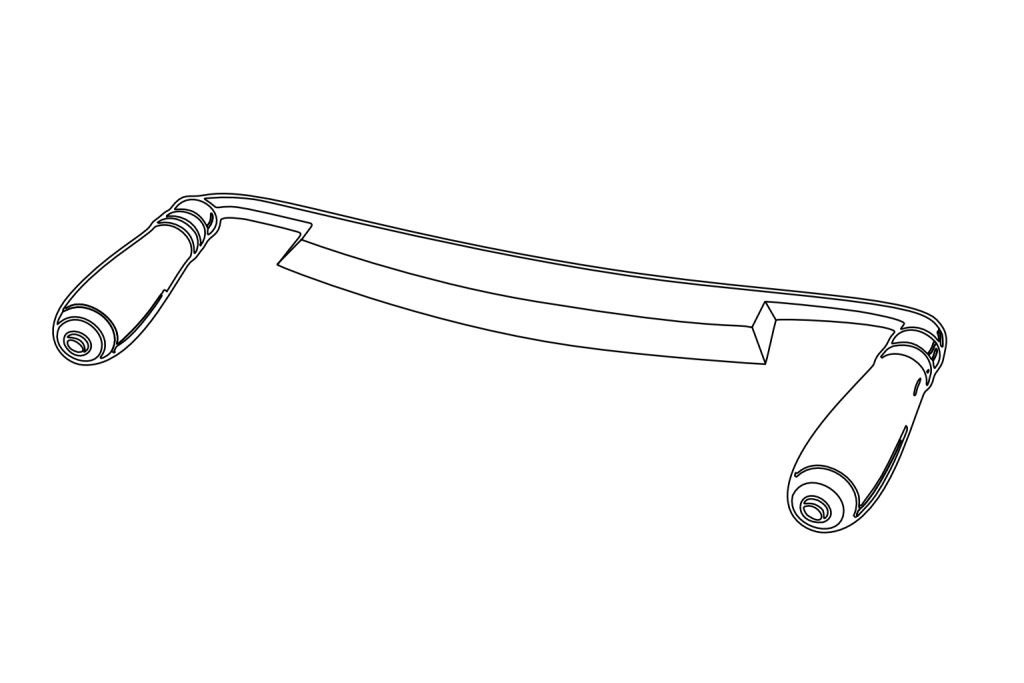
A two-handled cutting tool with a long blade pulled toward the user to shave, shape, and smooth wood. Commonly used in combination with a shaving horse to hold the workpiece. Essential in pre-industrial woodworking trades.
Terminology
| German | Ziehmesser |
|---|---|
| English | Drawknife |
Regional Variants
Draw shave, Drawing knife, Drawshave (UK/US/AU)
Professional Users
Wheelwrights, coopers, coachbuilders, joiners, turners, basket weavers, carpenters, bodgers
Period / Era
Antiquity to present; peak use 17th–19th century (pre-industrial craft tradition)
Sources
1. Wikimedia Commons — Jeffrey Gale on shaving horse with drawknife | 2. Wikimedia Commons — Kursteilnehmer mit verschiedenen Werkzeugen | 3. Flickr — sixmilliondollardan (CC BY 2.0) | 4. Flickr — Stone Soup Institute (CC BY 2.0) | 5. Wikimedia Commons — ZiehmesserTop.jpeg | 6. Flickr — Danny Ayers / danja (CC BY 2.0)
Image Credits
1. Wikimedia Commons, CC — see file page | 2. Wikimedia Commons, CC — see file page | 3. sixmilliondollardan, Flickr, CC BY 2.0 | 4. Stone Soup Institute, Flickr, CC BY 2.0 | 5. Wikimedia Commons, CC BY-SA 3.0 | 6. Danny Ayers (danja), Flickr, CC BY 2.0
Available as an archival print — Heritage Tools Archive Vol. 01 — Woodcraft