
#01 – Shaving Horse
Shaving Horse — Timeless Workbench of 5 Historic Woodworking Crafts
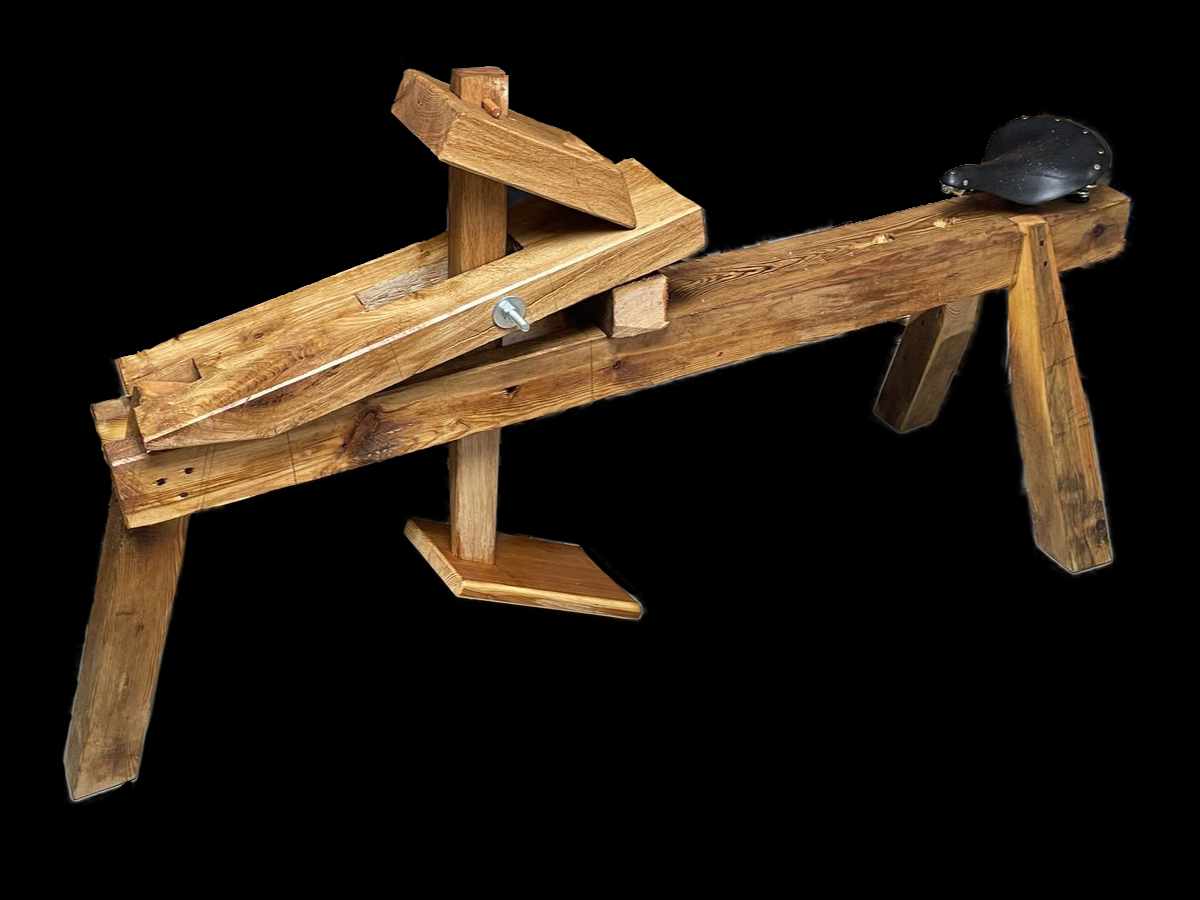
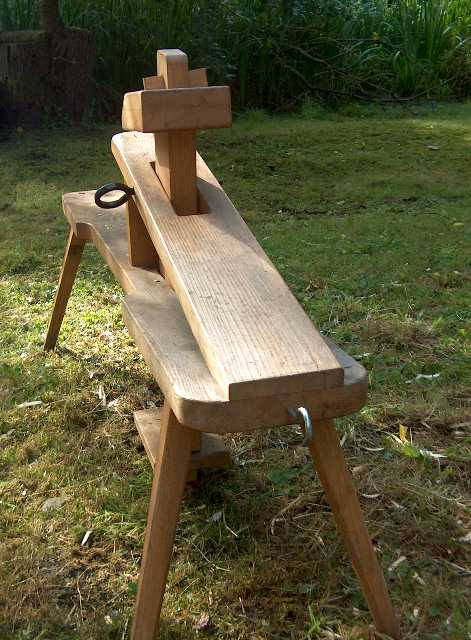
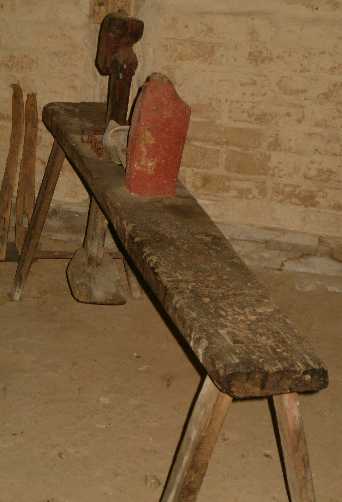
The shaving horse is a timeless foot-operated workbench that has held wood securely for craftsmen across 5 centuries — a body-powered vise and bench combined, keeping both hands free for the drawknife or spokeshave. Sitting astride the shaving horse, the craftsman clamps the work with foot pressure alone. No electricity, no noise — just wood, pressure, and skill.




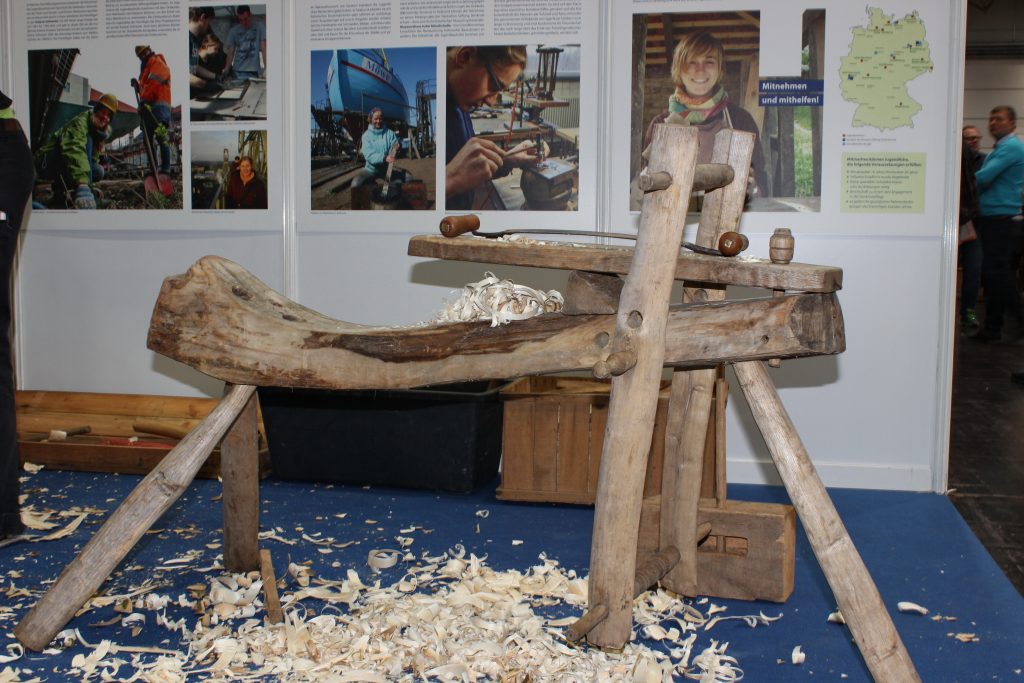

History of the Shaving Horse — A Timeless Craft Tradition
The shaving horse has been attested since the late 15th century and reached peak use in the 17th through 19th centuries. Wheelwrights, coopers, chair bodgers, and basket weavers depended on the shaving horse daily — the Schnitzbank was a fixture in every green woodworking workshop across Europe and North America. According to Wikipedia’s article on the shaving horse, it remained the standard clamping workbench for green woodworkers until the industrial revolution.
How the Shaving Horse Works
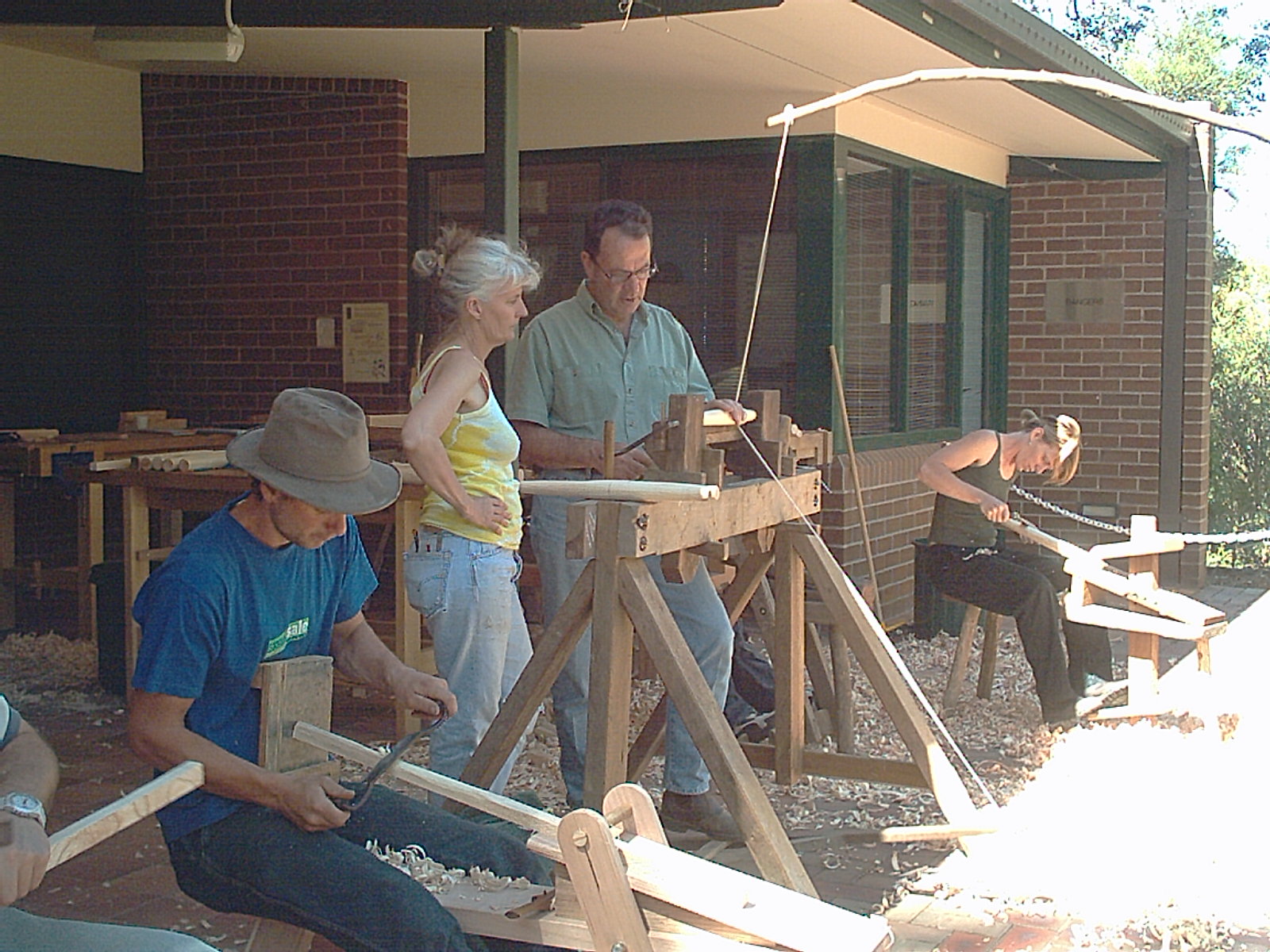
The craftsman sits astride the shaving horse and places the workpiece under the pivoting head. Pressing the foot treadle clamps the work — the harder the foot pushes, the tighter the grip. Both hands are free to pull the drawknife or spokeshave toward the body, shaping the wood with speed and precision. Release foot pressure and the work repositions in an instant.
Shaving Horse in 5 Historic Woodworking Crafts
From shaping wheel spokes to tapering chair legs to splitting basket splints, the shaving horse was the central workstation of pre-industrial green woodworking. Its timeless genius lies in its simplicity — a body-powered vise that responds instantly. See also the Drawknife — No. 02, used in combination with the shaving horse in almost every craft.
The Shaving Horse Today
The shaving horse has seen a remarkable revival in the international green woodworking movement. Chair bodgers, basket makers, and spoon carvers worldwide build their own benches and use them daily — proof that a timeless tool attested since the 15th century still has no equal.
Definition
A traditional foot-operated workbench and vise combined, used to hold a workpiece securely while shaping it with a drawknife or spokeshave. The operator sits astride the bench and clamps the work using foot pressure, keeping both hands free for cutting.
Terminology
| German | Ziehbank |
|---|---|
| English | Shaving Horse |
Regional Variants
EN: Shaving horse, Shave horse, Shaving bench, Shave bench, Dumbhead horse, Bodger's horse, Pole lathe horse, Schnitzelbank (US/immigrant), Draw horse — DE: Schnitzbank, Schnitzpferd, Schnitzesel, Schnitzelbank, Ziehbank, Zugbank, Zugbock, Hobelbank (regional), Heinzelbank, Schindelbank, Schneidesel — AT/CH: Hoanzlbank (AT), Hõazlbéng (AT dialect) — FR: Banc d'âne, Selle à planer — NL: Haalmes, Trekbank — Scandinavian: Täljhäst (SE), Täljbänk (SE), Skärbänk (SE), Togbank (DK), Snittebænk (DK), Vuoluhevonen (FI)
Professional Users
Wheelwrights, coopers, chair bodgers, basket weavers, carpenters, coopers, Windsor chair makers, green woodworkers,bodgers
Period / Era
Attested from the late 15th century; peak use 17th–19th century; still used in green woodworking today
Sources
Drew Langsner: Country Woodcraft, Rodale Press 1978 | Roy Underhill: The Woodwright's Shop, UNC Press 1981 | Wikipedia DE: Schnitzbank | Der Historische Handwerker: https://der-historische-handwerker.at/die-hoazlbank-schnitzbank/
Image Credits
Foto: © Stefan / HTA 2026 | Landschaftsmuseum Westerwald Hachenburg, Obj. 2010-1550, CC BY-NC-SA: https://rlp.museum-digital.de/object/2325
Available as an archival print — Heritage Tools Archive Vol. 01 — Woodcraft