
The Tool Archive
Welcome to the Heritage Tools Archive — a growing reference collection of traditional hand tools documented in depth. Each entry covers a single tool: its function, its history, the trades that depended on it, the regional names it was known by, and the period in which it was most widely used. Our goal is to build the most comprehensive bilingual English-German reference for pre-industrial hand tools available online.
How the Archive is Organized
The archive is structured around a systematic catalog that groups tools by trade and function. Each tool is assigned a unique Catalog Code in the format XX-00-00, where the first two letters indicate the trade category, the first number identifies the volume, and the final number identifies the individual entry within that volume.
Current Volume:
WO-01 — Woodworking Hand Tools The foundational volume of the archive, covering the core hand tools of the pre-industrial woodworker. From shaping and smoothing tools to cutting and joining implements, this volume documents the instruments that built furniture, barrels, wheels, boats, and buildings for centuries. The first entries in this volume — the Shaving Horse (WO-01-01) and the Drawknife (WO-01-02) — represent two of the most enduring and closely related tools in the woodworking tradition, used together in crafts from coopering to Windsor chair making.
Planned Volumes:
- WO-02 — Woodworking Measuring & Marking Tools
- SM-01 — Blacksmithing & Metalworking Tools
- CO-01 — Coopering & Barrel Making Tools
- LW-01 — Leatherworking Tools
- SH-01 — Shipbuilding & Boatbuilding Tools
What Each Entry Contains
Every tool entry in the archive is documented with the same consistent structure, making it easy to compare tools across trades, regions, and time periods.
English Term — the standard English name and all common variants. The drawknife, for example, is also known as a draw knife, drawing knife, draw shave, or shaving knife depending on region and trade.
German Term — the standard German equivalent and regional variants. The parallel craft traditions of the German-speaking world developed rich and varied vocabularies for the same tools — from Zugmesser and Ziehmesser to Reifmesser, depending on the trade.
Regional Variants — a comprehensive list of alternative names across languages and regions, from Scandinavian bandkniv and Norwegian båndkniv to Dutch haalmes, French coltello da petto, and Austrian dialect terms.
Definition — a precise, concise description of the tool’s function, operating principle, and typical construction. Definitions are written to be useful both to practitioners and to researchers encountering the tool for the first time.
Professional Users — the specific trades and craftspeople who relied on the tool as part of their daily work: wheelwrights, coopers, carpenters, joiners, basket weavers, Windsor chair makers, shipwrights, bow makers, clog makers, and more.
Period / Era — the historical period of peak use, from medieval origins through the pre-industrial peak of the 17th to 19th centuries to the decline brought by industrialization — and, in some cases, the revival of interest among contemporary green woodworkers and craft practitioners.
Sources & Image Credits — full documentation of all sources and images used in each entry, with licenses clearly stated. We use only public domain materials, open-access museum collections, and images released under Creative Commons licenses that permit reuse.
Images and Visual Documentation
Each tool entry is illustrated with images drawn from verified public domain and freely licensed sources, including the Library of Congress, the Smithsonian Institution, Wikimedia Commons, and individual photographers who have released their work under Creative Commons Attribution licenses. We document every image with its source, photographer, date, and license — both because accuracy matters and because we believe in recognizing the work of those who made these images available.
Browsing the Archive
You can browse all tool entries below or search by name, trade, or catalog code. Each entry links to a full detail page with complete documentation, historical context, regional variants, and image gallery. New entries are added continuously as research and documentation progresses.
A Bilingual Archive
The Heritage Tools Archive takes a deliberately bilingual approach, documenting tools in both English and German throughout. This reflects the complementary traditions of woodworking and craft in the English-speaking and German-speaking worlds — traditions that share many tools but developed distinct names, regional variants, and cultural contexts over the centuries. By documenting both, we aim to make the archive useful to researchers, craftspeople, and enthusiasts on both sides of the language divide.
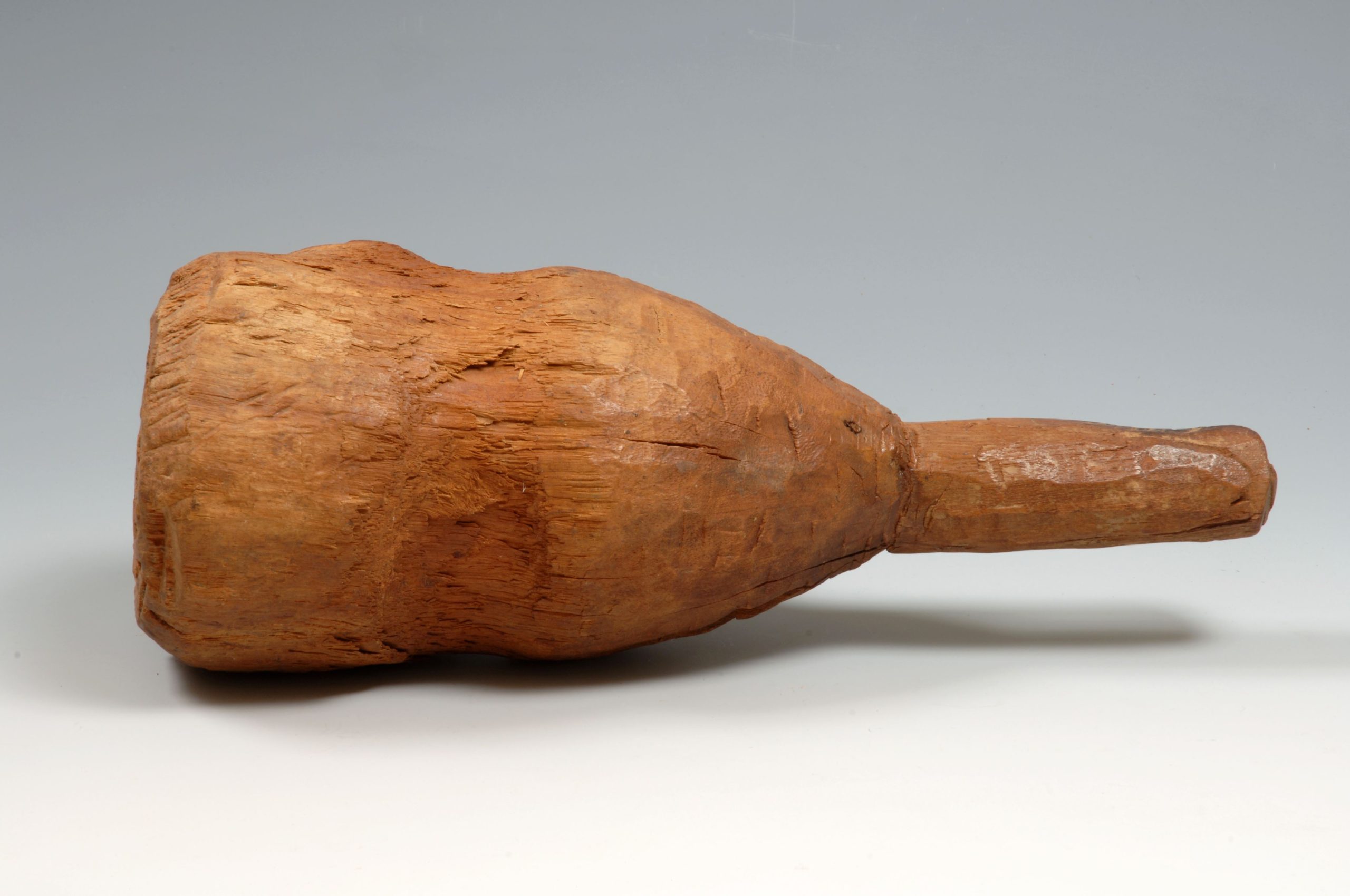
#20 — Wooden Mallet / Holzhammer
Second photograph of the ancient Egyptian wooden mallet (Museo Egizio, Turin, S 7519), showing the tool from a different angle. The robust cylindrical head is characteristic of traditional woodworking mallets used for chisel work and assembly.

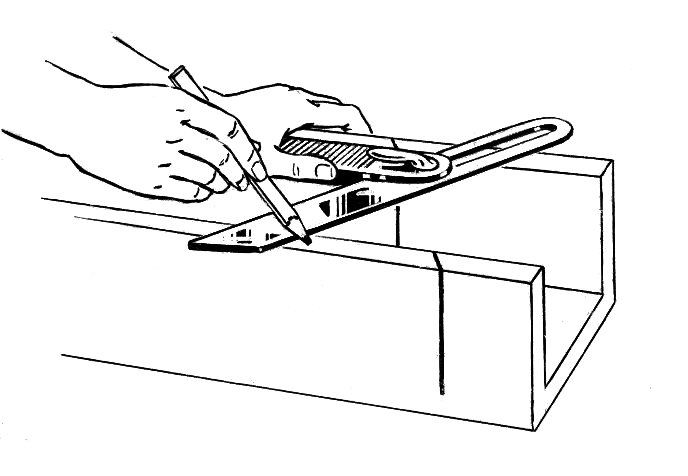
#19 — Try Square / Winkelmaß
Illustration from Wood-Working Tools; How to Use Them (Industrial School Association, Boston) showing the correct technique for marking a line across a board with a try square. The stock is held firmly against the face of the workpiece while the tongue guides the marking knife.

#18 – Marking Knife
A sharp, thin-bladed knife used to scribe precise layout lines across wood fibres, severing them cleanly. The knife wall — the small groove left by the blade — guides the chisel and saw with greater accuracy than a pencil line. Essential for dovetail layout, tenon shoulders, and any joint requiring a clean, accurate baseline.

#16 – Wooden Clamp
Photograph of a Klemmsia-type eccentric toggle clamp made from wood with a steel rail, showing the lever-operated clamping mechanism used in woodworking.

#17 — Marking Gauge / Streichmaß
Historical illustration from a 1905 woodworking manual showing the correct technique for using a marking gauge to scribe a line parallel to a board edge.
#15 — Bevel
An adjustable layout tool consisting of a handle and a pivoting steel blade that can be set and locked at any angle. Used to transfer, mark, and check angles — including dovetail ratios, chamfer pitches, and mitre angles — consistently across multiple components. The complement to the fixed right angle of the try square.
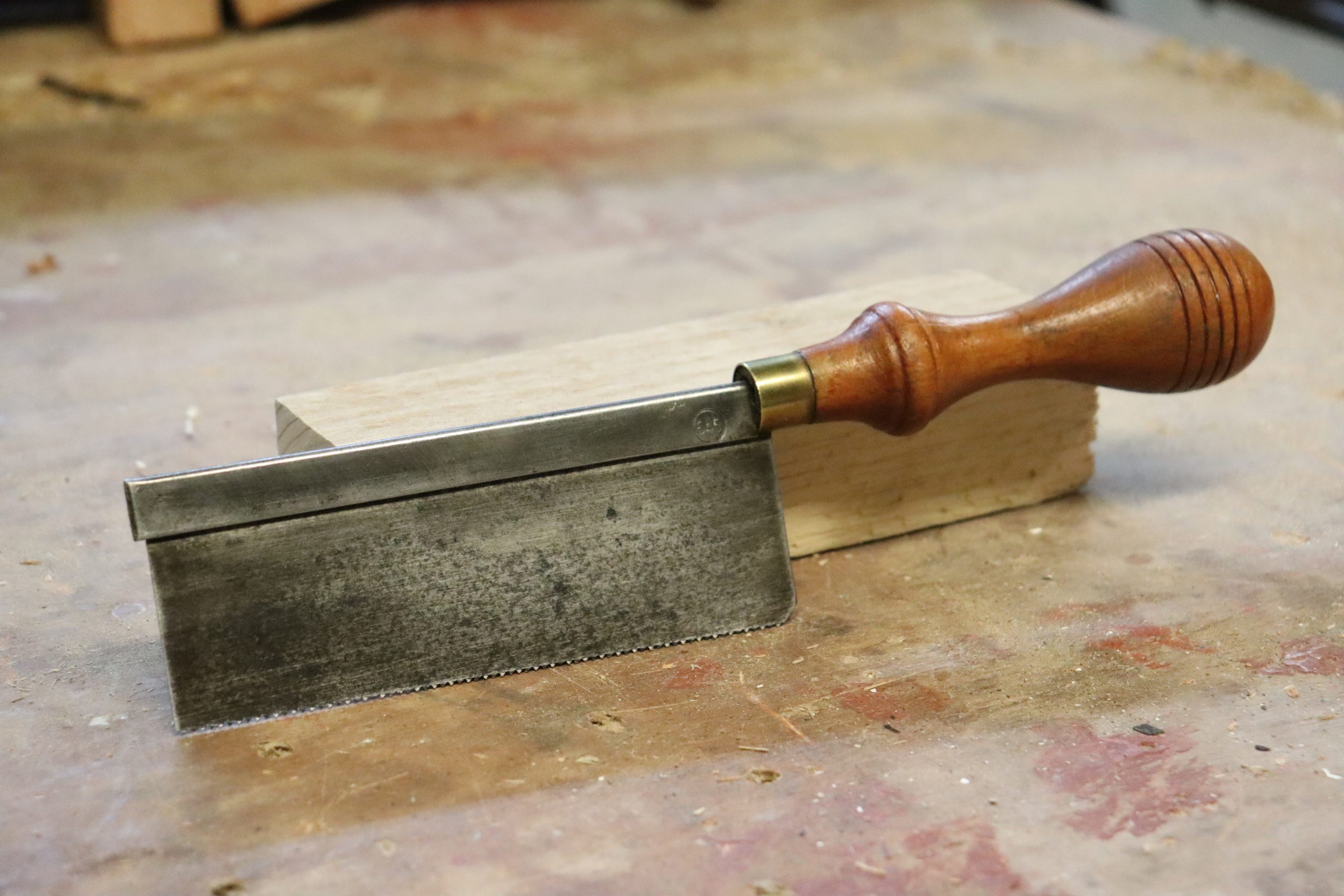
#14 — Tenon Saw
A fine-toothed saw with a rigid brass or steel back that keeps the blade straight under cutting pressure. Used for accurate joinery cuts — tenon cheeks, tenon shoulders, dovetail baselines, and mitre cuts. The back limits depth of cut, making the saw ideal for controlled joinery work.

#13 – Mortise Chisel
Mortise Chisel — The Rugged Tool Behind 4 Enduring Woodworking Joints The mortise chisel is the rugged foundation of hand-cut joinery — a thick, heavy-bladed tool built to chop deep, rectangular mortises in timber and withstand the repeated mallet blows that no ordinary chisel could survive. Without the mortise chisel, the mortise-and-tenon joint — the…
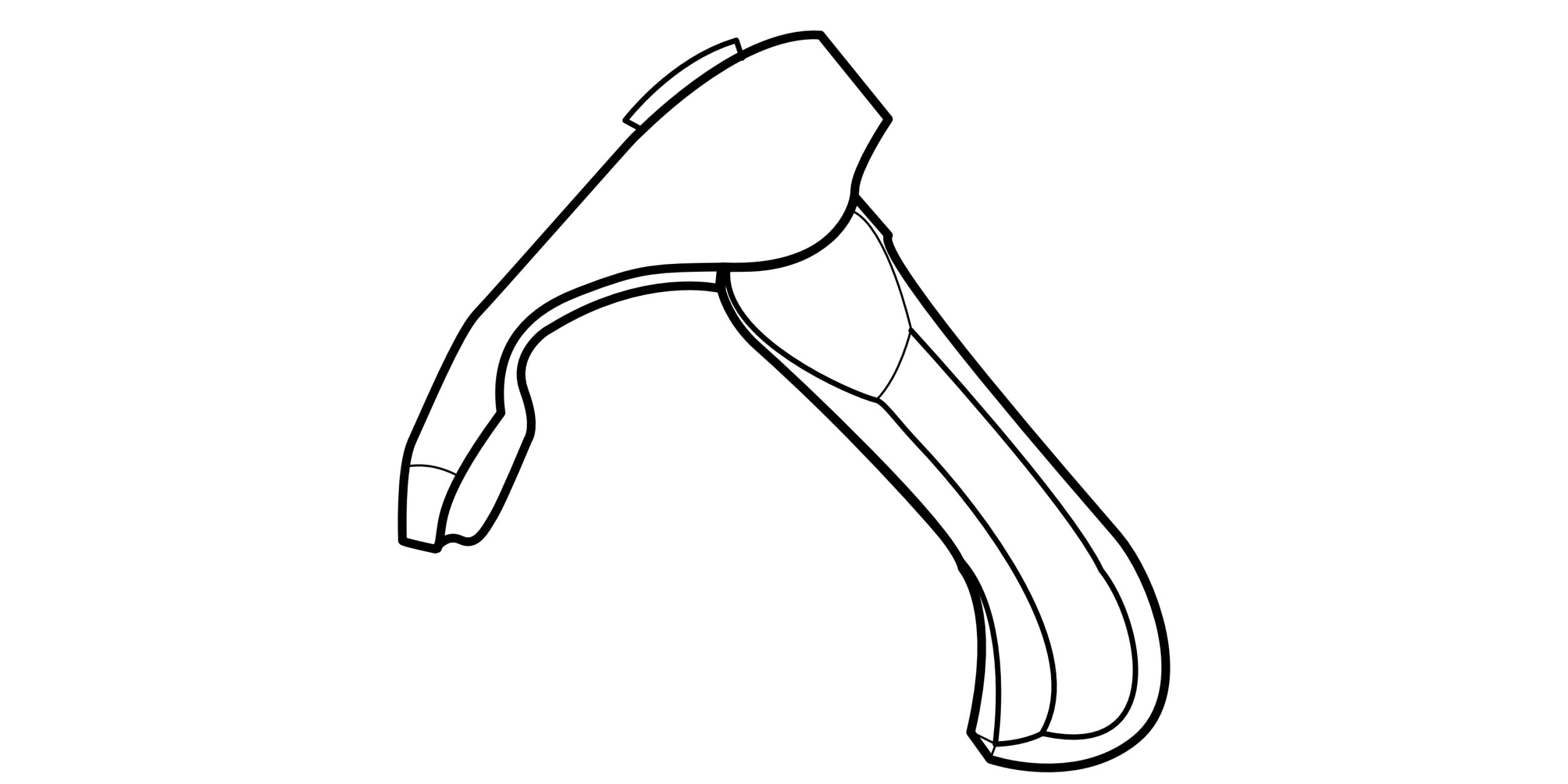
#12 – Adze
The adze is an ancient edge tool used for shaping, smoothing, and hollowing wood along the grain. Its curved blade distinguishes it from the axe and makes it indispensable in timber framing, coopering, and boat building.
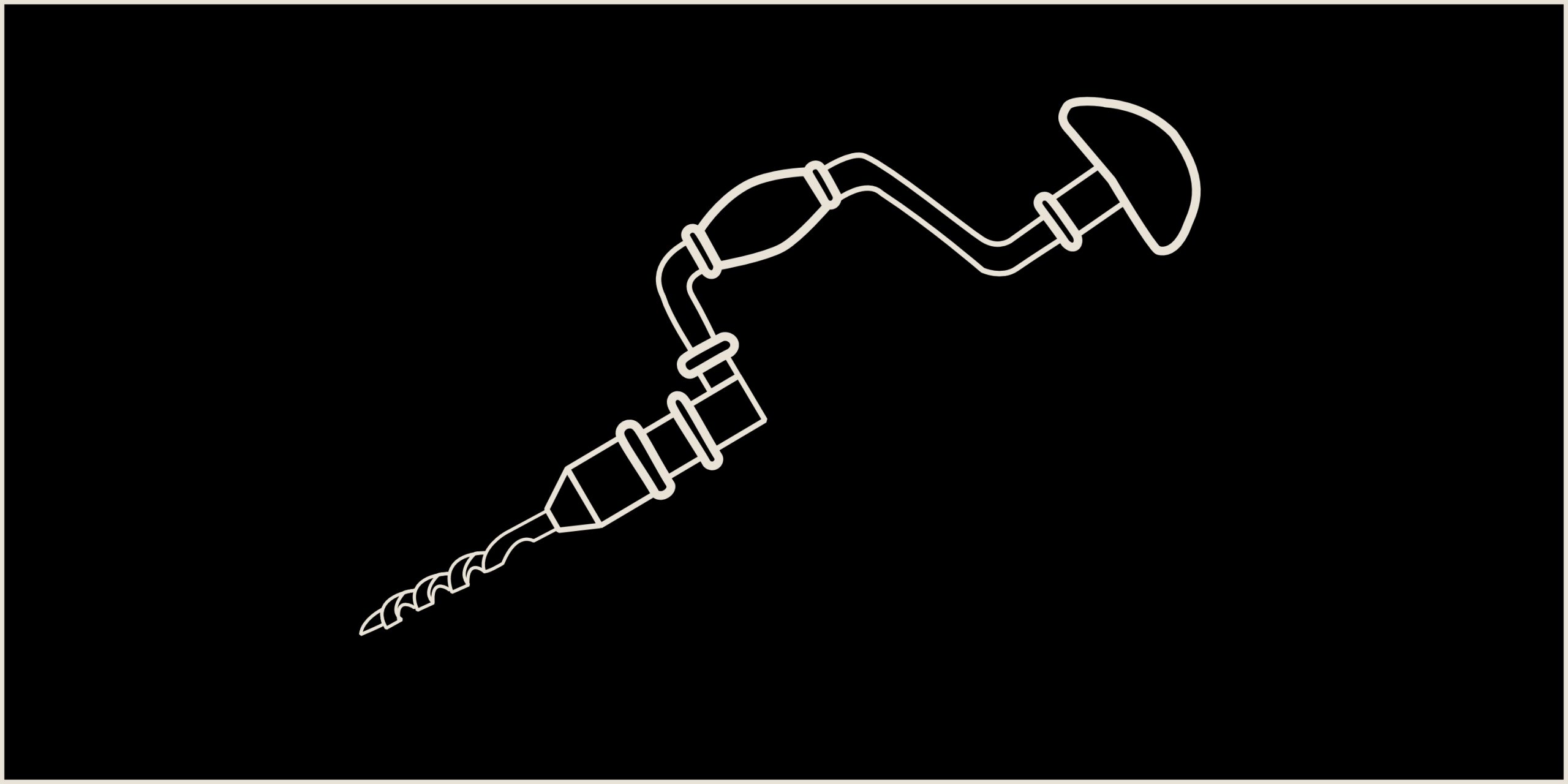
#11 – Brace and Bit
A hand-powered drilling tool consisting of a U-shaped crank (the brace) that holds an interchangeable auger bit. The crank generates high torque through its sweeping arc, allowing the craftsman to bore large, clean holes in timber without electricity. The standard boring tool in woodworking from the 18th century until the electric drill.

#10 – Router Plane
Router Plane Joinery Groove — The Rugged Tool for 3 Classic Woodworking Joints Router plane joinery groove work demands rugged precision — flattening and levelling the bottom of grooves, dadoes, and recesses to a consistent depth that no chisel can reliably produce. The router plane makes this remarkable joinery groove work possible by riding its…

#09 – Rabbet Plane
A plane designed to cut rabbets (rebates) — stepped recesses along the edge of a board. Its blade extends to the full width of the sole, allowing it to cut right into corners. Used in joinery for fitting panels, doors, windows, and drawer bottoms.
How the Archive is Organized
The archive is structured around a systematic catalog that groups tools by trade and function. Each tool is assigned a unique Catalog Code in the format XX-00-00, where the first two letters indicate the trade category, the first number identifies the volume, and the final number identifies the individual entry within that volume.
Current Volume:
WO-01 — Woodworking Hand Tools The foundational volume of the archive, covering the core hand tools of the pre-industrial woodworker. From shaping and smoothing tools to cutting and joining implements, this volume documents the instruments that built furniture, barrels, wheels, boats, and buildings for centuries. The first entries in this volume — the Shaving Horse (WO-01-01) and the Drawknife (WO-01-02) — represent two of the most enduring and closely related tools in the woodworking tradition, used together in crafts from coopering to Windsor chair making.
Planned Volumes:
- WO-02 — Woodworking Measuring & Marking Tools
- SM-01 — Blacksmithing & Metalworking Tools
- CO-01 — Coopering & Barrel Making Tools
- LW-01 — Leatherworking Tools
- SH-01 — Shipbuilding & Boatbuilding Tools
What Each Entry Contains
Every tool entry in the archive is documented with the same consistent structure, making it easy to compare tools across trades, regions, and time periods.
English Term — the standard English name and all common variants. The drawknife, for example, is also known as a draw knife, drawing knife, draw shave, or shaving knife depending on region and trade.
German Term — the standard German equivalent and regional variants. The parallel craft traditions of the German-speaking world developed rich and varied vocabularies for the same tools — from Zugmesser and Ziehmesser to Reifmesser, depending on the trade.
Regional Variants — a comprehensive list of alternative names across languages and regions, from Scandinavian bandkniv and Norwegian båndkniv to Dutch haalmes, French coltello da petto, and Austrian dialect terms.
Definition — a precise, concise description of the tool’s function, operating principle, and typical construction. Definitions are written to be useful both to practitioners and to researchers encountering the tool for the first time.
Professional Users — the specific trades and craftspeople who relied on the tool as part of their daily work: wheelwrights, coopers, carpenters, joiners, basket weavers, Windsor chair makers, shipwrights, bow makers, clog makers, and more.
Period / Era — the historical period of peak use, from medieval origins through the pre-industrial peak of the 17th to 19th centuries to the decline brought by industrialization — and, in some cases, the revival of interest among contemporary green woodworkers and craft practitioners.
Sources & Image Credits — full documentation of all sources and images used in each entry, with licenses clearly stated. We use only public domain materials, open-access museum collections, and images released under Creative Commons licenses that permit reuse.
Images and Visual Documentation
Each tool entry is illustrated with images drawn from verified public domain and freely licensed sources, including the Library of Congress, the Smithsonian Institution, Wikimedia Commons, and individual photographers who have released their work under Creative Commons Attribution licenses. We document every image with its source, photographer, date, and license — both because accuracy matters and because we believe in recognizing the work of those who made these images available.
Browsing the Archive
You can browse all tool entries below or search by name, trade, or catalog code. Each entry links to a full detail page with complete documentation, historical context, regional variants, and image gallery. New entries are added continuously as research and documentation progresses.
A Bilingual Archive
The Heritage Tools Archive takes a deliberately bilingual approach, documenting tools in both English and German throughout. This reflects the complementary traditions of woodworking and craft in the English-speaking and German-speaking worlds — traditions that share many tools but developed distinct names, regional variants, and cultural contexts over the centuries. By documenting both, we aim to make the archive useful to researchers, craftspeople, and enthusiasts on both sides of the language divide.