
#18 – Marking Knife
Marking Knife — Timeless First Cut of the Hand Craftsman in 3 Classic Joints
The marking knife is the timeless first tool of every accurate joint — scribing a clean, severed line across wood fibres that guides the saw and chisel with a precision no pencil line can approach. Where a pencil leaves a wide, compressible mark that the saw can drift from, the marking knife leaves a knife wall: a small, precise groove cut into the surface of the timber, into which the saw or chisel registers exactly, eliminating the gap between layout and execution that separates acceptable joinery from exceptional joinery.
History of the Marking Knife
The marking knife has ancient origins — knives for scribing timber have been used in woodworking continuously from prehistory to the present day. As noted in Wikipedia’s marking knife article, the specific use of a knife rather than a scribe or awl for laying out joinery lines is documented from the earliest periods of documented craft, and remains the standard practice wherever hand joinery is executed to a high standard.
The striking knife — a heavier, chisel-edged blade used with a try square or straightedge — was the standard tool in joiners‘ workshops; the marking knife, typically lighter and more refined, served cabinetmakers and instrument makers. Both operate on the same principle: cut the fibres, don’t crush them.
How the Marking Knife Works
The craftsman registers a try square or sliding bevel against the reference face, then draws the marking knife along the blade of the square with light, controlled pressure, severing the surface fibres of the timber cleanly. The result is a knife wall: a fine groove with a vertical wall on the joint side and a chamfered lead-in on the waste side.
The vertical wall is the reference: the chisel is placed in it and pared to it exactly; the saw kerf is started against it and runs parallel to it for the full depth of the cut. This is why the knife wall produces tighter, cleaner joints than any pencil line — the wall is a physical stop, not a visual target. For cross-grain lines — tenon shoulders, dovetail baselines — the knife severs the fibres completely, preventing the saw from tearing the surface as it crosses the grain. For long-grain lines, the marking gauge does the equivalent work with its pin or blade running parallel to the edge.
The Marking Knife in 3 Classic Joinery Joints
The dovetail baseline is the defining application of the marking knife: the baseline scribed across the face and edges of the dovetail board defines the depth of the joint and must be sharp, clean, and exactly square if the finished joint is to have a crisp, gapless shoulder line. Tenon shoulders rely on the knife line for the same reason: when the tenon saw reaches the shoulder line, the knife wall stops the saw exactly on the line and severs the surface fibres simultaneously, preventing tearout.
Housing joint shoulders — the cross-grain cuts that define the front edge of a shelf housing — are scribed with the marking knife and then pared to with a chisel, the knife wall providing the precise register for a flat-bottomed housing. Three enduring joints, all beginning with the same timeless cut. See also the Marking Gauge — No. 17, which scribes the parallel lines that the marking knife’s cross-grain cuts intersect.
Marking Knife Forms and Selection
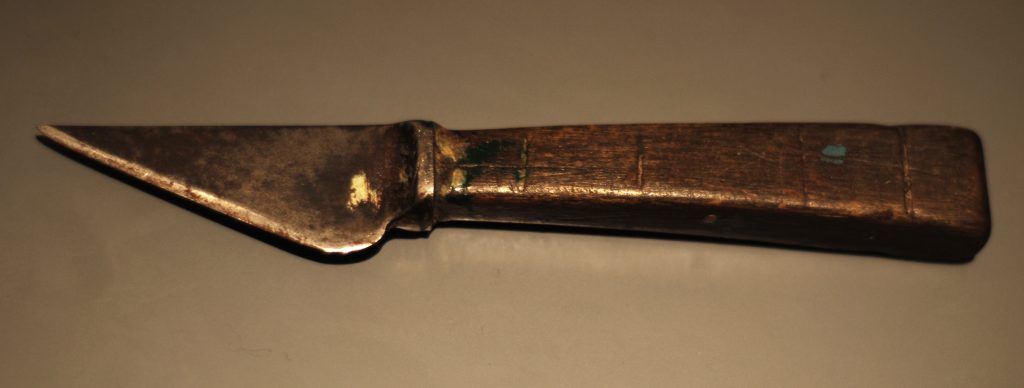
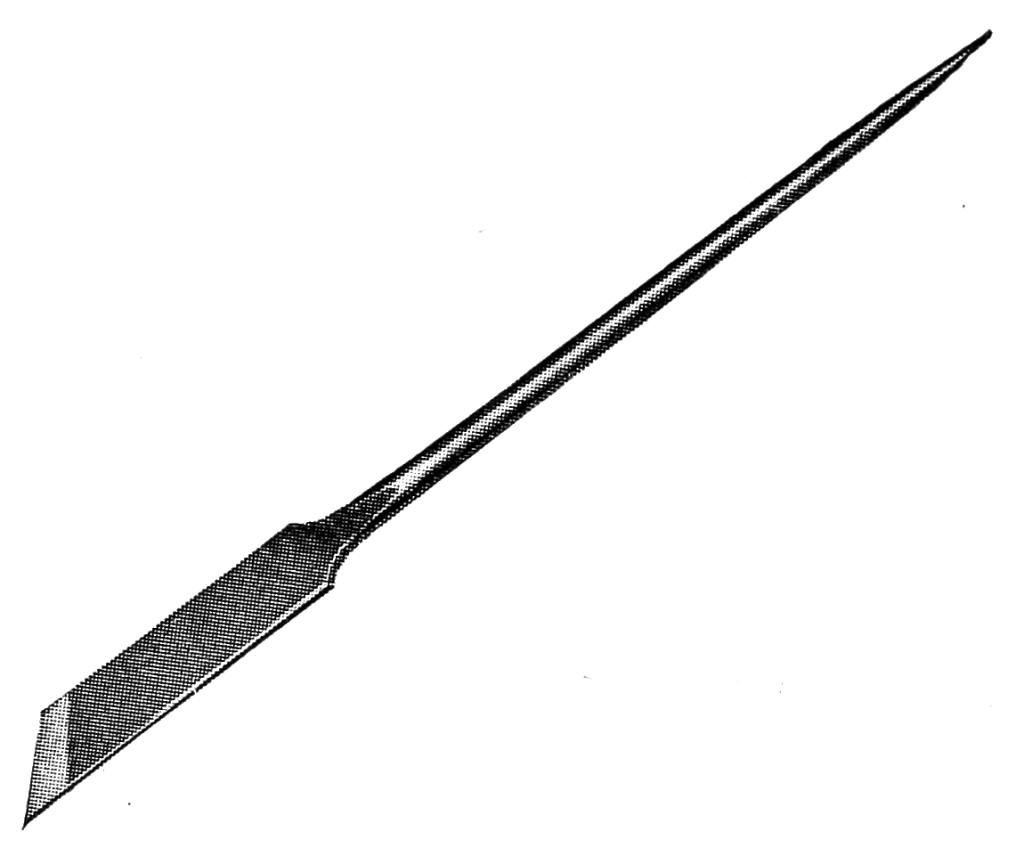
The marking knife takes several forms: the striking knife, with a single bevel and a flat back, is registered against a square with the flat back vertical, producing a perfectly perpendicular cut; the double-bevel marking knife can scribe from either side of a square; the craft knife or scalpel, used in instrument making and fine cabinetwork, offers replaceable blades for consistent sharpness. The most important quality in a marking knife is a keen, maintainable edge: the knife must sever fibres cleanly, not compress them, and a dull knife wall is worse than no knife wall at all.
The Marking Knife Today
The marking knife remains the timeless first tool of every hand-tool joiner and cabinetmaker. In the modern hand-tool revival, the knife wall has been recognised as the single most important contributor to the clean, gapless joint lines that distinguish hand joinery done at a high level — and the marking knife that produces it is among the simplest, most enduring tools in the entire workshop.
Definition
A sharp, thin-bladed knife used to scribe precise layout lines across wood fibres, severing them cleanly. The knife wall — the small groove left by the blade — guides the chisel and saw with greater accuracy than a pencil line. Essential for dovetail layout, tenon shoulders, and any joint requiring a clean, accurate baseline.
Terminology
| German | Anreißmesser / Streichmesser |
|---|---|
| English | Marking Knife / Striking Knife / Layout Knife |
Regional Variants
EN: Marking knife, Striking knife, Layout knife, Scribe knife — DE: Anreißmesser, Streichmesser, Reißmesser — FR: Couteau à tracer — NL: Aanstreekmes — SE: Märkkniv — DK: Markeringskniv
Professional Users
Joiners, cabinetmakers, furniture makers, carpenters, instrument makers
Period / Era
Ancient origins; in continuous use in woodworking and joinery to the present day
Available as an archival print — Heritage Tools Archive Vol. 02 — Joinery Tools