
#16 – Wooden Clamp
Wooden Clamp — The Timeless Clamping Tool for 3 Classic Joinery Assemblies
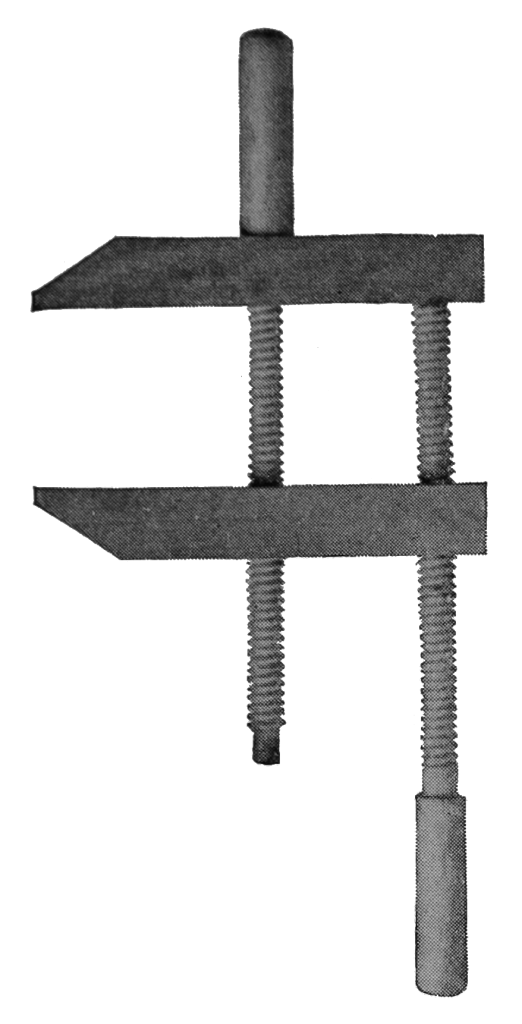
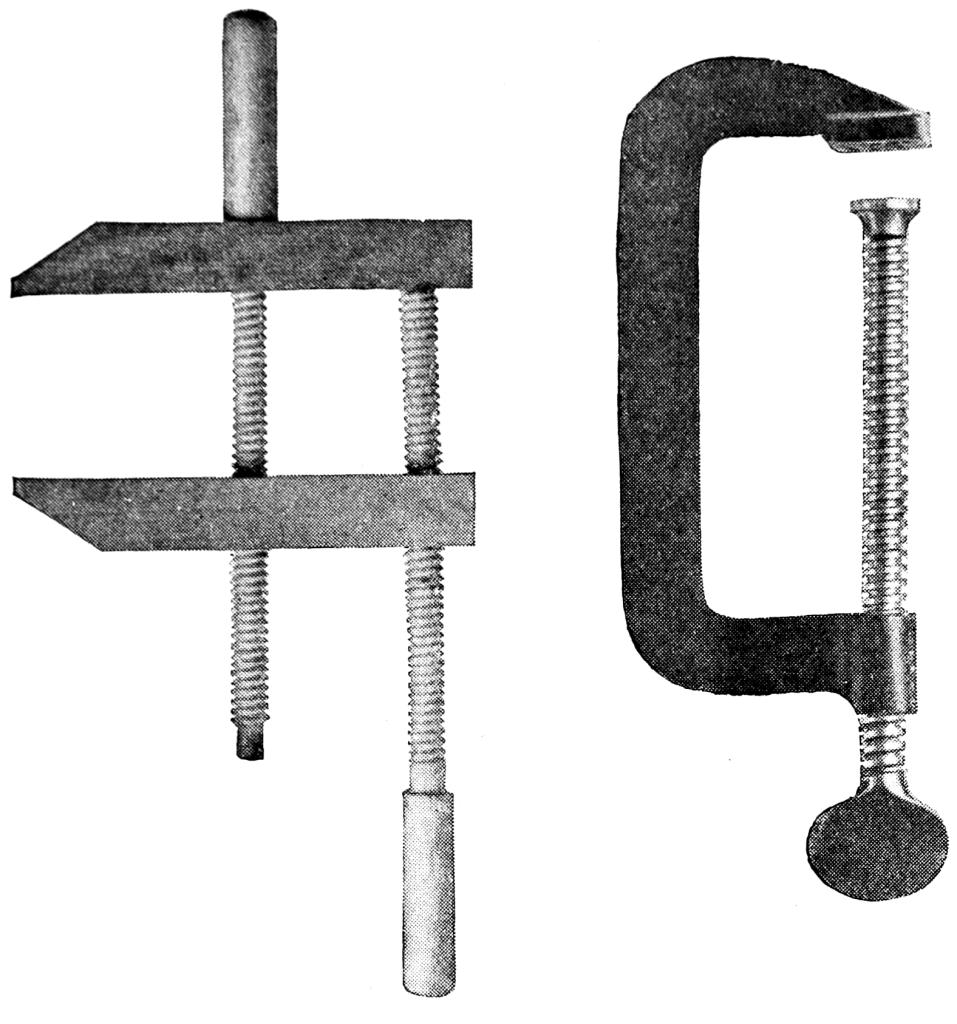
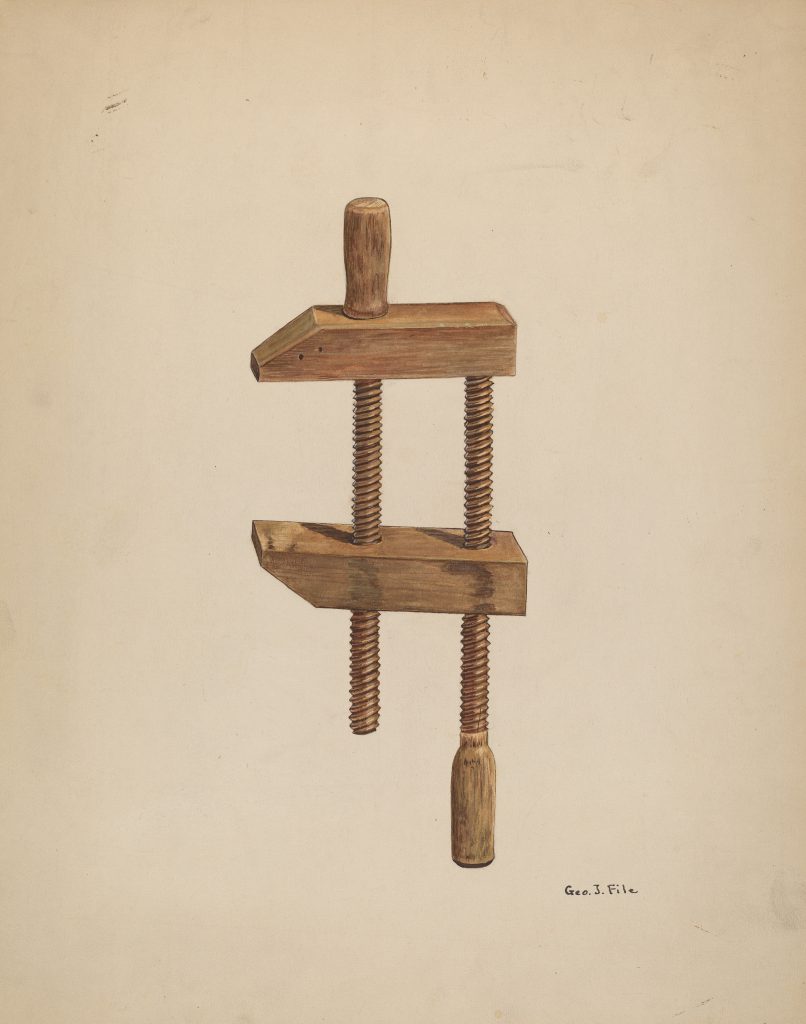
The wooden hand screw clamp is the timeless assembly tool of the joinery workshop — two parallel wooden jaws controlled by twin wooden screws, capable of clamping flat surfaces, angled joints, and irregular workpieces with even, adjustable pressure that no metal clamp can safely apply to finished timber. It is the clamp that holds the joint while the glue sets, the bench stop that holds the workpiece while the plane runs, and the third hand that makes every assembly operation possible.
History of the Wooden Hand Screw Clamp
The wooden hand screw clamp has been attested since the 17th century and remained the standard clamping tool in joinery and cabinetmaking workshops well into the 20th century. As documented in Wikipedia’s clamp article, the hand screw’s twin-screw mechanism allows the jaws to be set parallel for even pressure across a flat joint, or angled for clamping tapered or irregular workpieces — a flexibility that no single-screw metal clamp achieves.
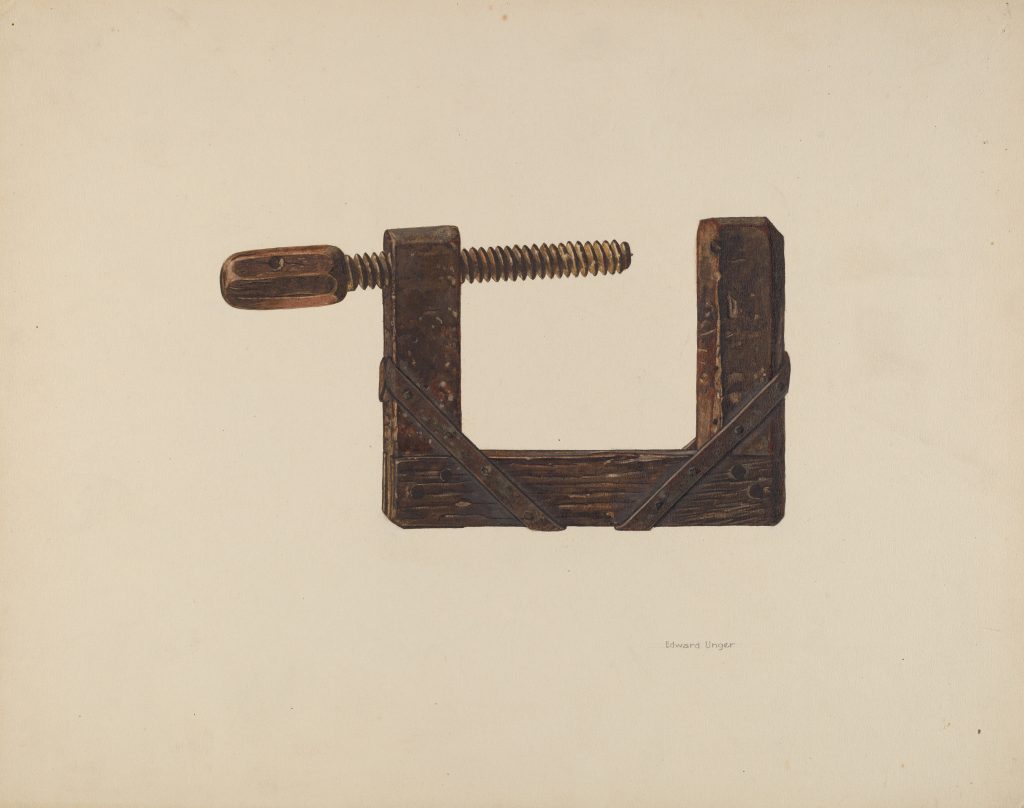
Traditional hand screws were made entirely from dense hardwoods: beech, hornbeam, and maple for the jaws; threaded hardwood or boxwood for the screws. The wooden jaws resist marring the work surface, making the hand screw the preferred clamp wherever finished surfaces are being assembled. Cassells‘ Carpentry and Joinery, the authoritative 19th-century reference, illustrates the hand screw prominently among the essential workshop tools — evidence of its central role in the joiner’s and cabinetmaker’s practice.
How the Wooden Hand Screw Clamp Works
The craftsman opens the jaws by spinning both handles simultaneously in opposite directions — the front screw controls the jaw opening, the rear screw controls the jaw angle. To clamp a parallel joint, both jaws are set flush and both screws are tightened evenly. To clamp an angled joint or a tapered surface, the rear screw is tightened first to set the jaw angle, then the front screw is tightened to close the jaws onto the work.
The twin-screw mechanism distributes clamping pressure evenly across the full length of the jaw face, preventing the concentrated loading that a single-screw metal clamp applies at one point. The wooden jaw faces grip without bruising finished surfaces — no protective pads required. Multiple hand screws can be stacked or arranged in any configuration to hold complex assemblies from any direction.
The Wooden Hand Screw Clamp in 3 Classic Joinery Assemblies
Frame-and-panel glue-up is the primary application of the wooden hand screw: door frames, window sashes, and cabinet carcasses assembled with mortise-and-tenon joints require even clamping pressure across multiple joints simultaneously, and the hand screw’s parallel jaw action distributes this pressure without racking or twisting the frame out of square. Dovetail drawer assembly uses the hand screw to close the corner joints, the wooden jaws protecting the tail and pin board surfaces from bruising while the glue sets.
Bench-holding — using the hand screw as a bench stop or work-holding device by clamping it to the bench edge — gives the craftsman a third hand for planing, chiselling, and sawing operations where a conventional vice cannot hold the workpiece. Three enduring assembly operations in traditional joinery, all dependent on the same timeless wooden clamp. See also the Mortise Chisel — No. 13, which cuts the joints the wooden clamp holds under pressure.
Wooden Hand Screw Clamp Sizes and Selection
Hand screws are sized by jaw length, typically from 150 mm for fine cabinetwork to 450 mm for frame joinery. The jaw length determines both the clamping reach and the clamping pressure available: longer jaws distribute the load over a greater area, reducing the risk of crushing soft timbers.
The screw threads must be clean and smooth-running for the clamp to open and close quickly during assembly — the craftsman often has only minutes before the glue begins to set. Vintage hand screws in beech from European toolmakers remain in daily use and are sought after for the quality of their threads and jaw flatness.
The Wooden Hand Screw Clamp Today
The wooden hand screw clamp remains a timeless, irreplaceable assembly tool in every serious joinery and cabinetmaking workshop. The revival of hand-tool furniture making has brought renewed appreciation for its unique jaw geometry and surface-protecting wooden faces — qualities that no metal clamp replicates. No mortise-and-tenon frame is assembled without one.
Definition
A clamping tool with two parallel wooden jaws connected by two wooden screws, allowing the jaws to be set at any angle. Used to hold glued joints under even pressure during assembly, to secure workpieces to the bench, and to clamp angled or irregular surfaces that metal clamps cannot grip without damage.
Terminology
| German | Schraubzwinge / Holzschraubzwinge / Handzwinge |
|---|---|
| English | Wooden Hand Screw Clamp / Hand Screw / Joiner's Clamp |
Regional Variants
EN: Wooden hand screw clamp, Hand screw, Joiner's clamp, Cabinet maker's clamp — DE: Schraubzwinge, Holzschraubzwinge, Handzwinge, Tischlerknecht — FR: Valet de menuisier, Sergent — NL: Schroefklem — SE: Träskruv — DK: Træskrue
Professional Users
Joiners, cabinetmakers, furniture makers, carpenters, instrument makers
Period / Era
Attested from the 17th century; in continuous use in joinery and cabinetmaking to the present day
Available as an archival print — Heritage Tools Archive Vol. 02 — Joinery Tools