
#17 — Marking Gauge / Streichmaß
Marking Gauge — The Enduring Layout Tool for 4 Classic Joinery Joints
The marking gauge is the enduring layout tool of the joinery workshop — the first tool used before any saw or chisel touches the timber, scribing the parallel lines that define every mortise, tenon, rebate, and groove. Without the marking gauge, hand joinery is guesswork; with it, every layout line is transferred from a single reference face with consistent, repeatable precision across every piece in the job.
History of the Marking Gauge
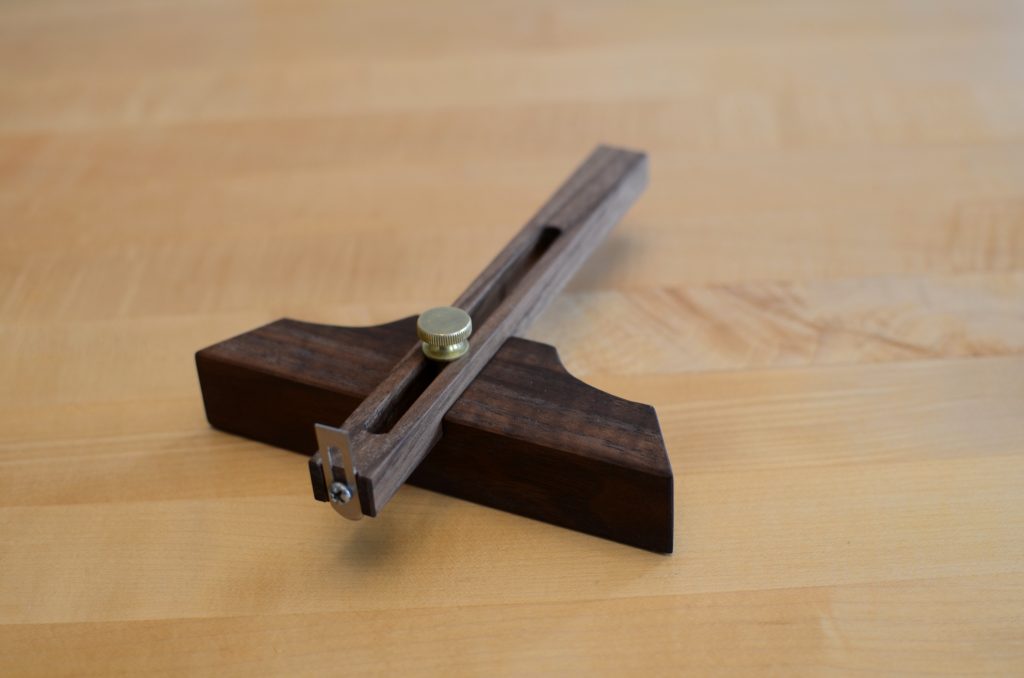
The marking gauge has been attested since the 17th century and has been an indispensable layout tool in every joinery and carpentry workshop from that period to the present. As noted in Wikipedia’s marking gauge article, the tool’s basic geometry — a beam with an adjustable fence locked at a set distance from a scribing point — has remained essentially unchanged for over three hundred years, because it solves the layout problem perfectly and completely.
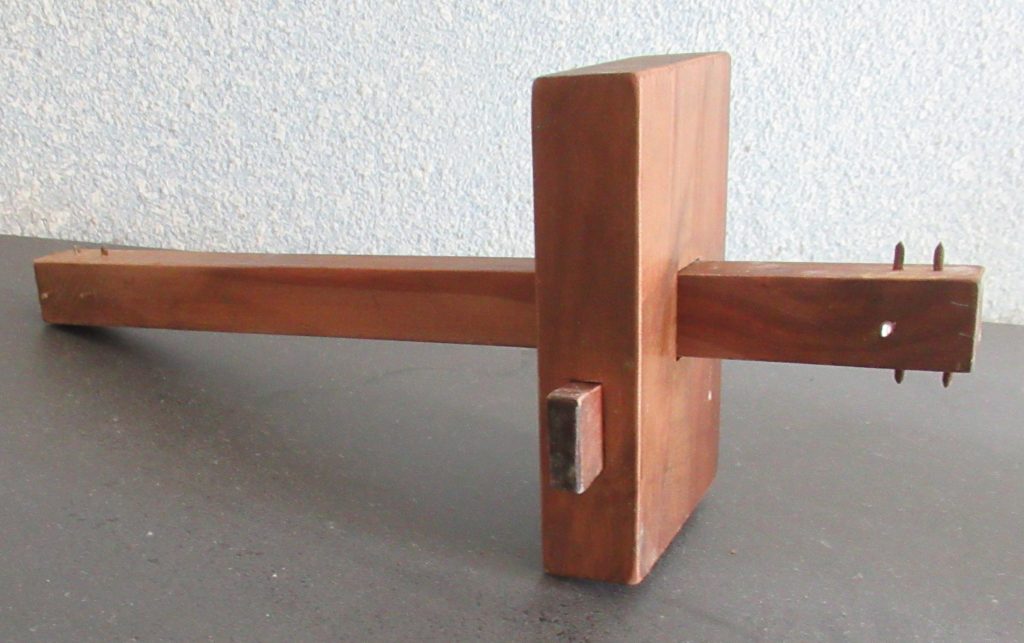
Wooden marking gauges were produced by individual craftsmen and toolmakers; by the 19th century, Sheffield and Birmingham makers had standardised the mortise gauge — carrying two independently adjustable pins — as the tool of choice for mortise-and-tenon layout, allowing both mortise walls to be scribed from the reference face in a single pass.
How the Marking Gauge Works
The craftsman sets the fence at the required distance from the scribing pin using a thumbscrew or wedge, measuring from pin to fence face with a rule. The fence is then pressed firmly against the reference face or edge of the workpiece and the gauge pushed or pulled along the grain — the scribing pin tracing a fine line parallel to the reference face at the set distance.
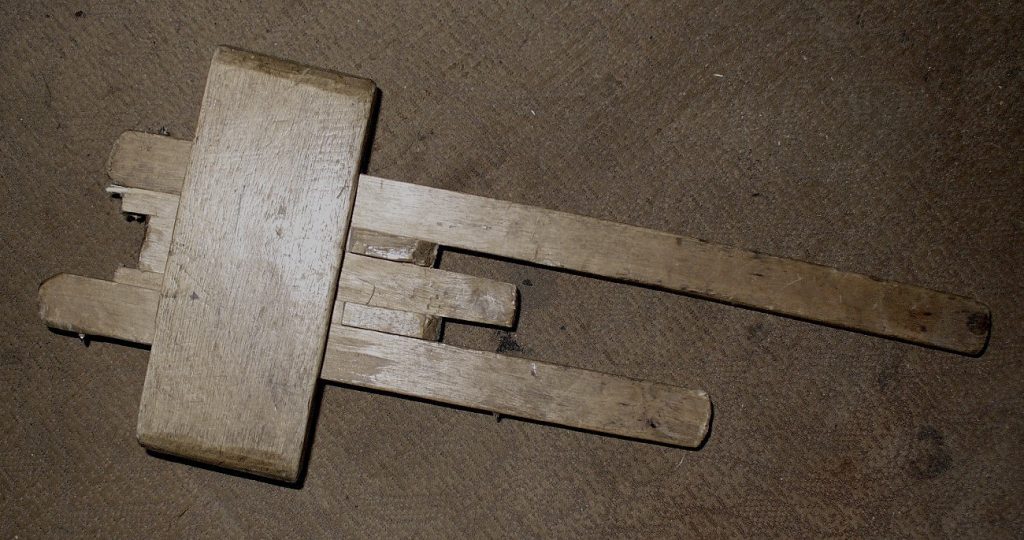
The line is typically scribed twice: once lightly to check the setting, once firmly to leave a clear, clean mark. For mortise layout, the mortise gauge carries two pins set to the mortise width; a single pass scribes both walls simultaneously, ensuring they are always parallel and correctly spaced regardless of how many pieces are being laid out. The panel gauge — a larger version with a wider fence — serves the same purpose on wider boards, scribing lines for panel rebates and housing joints at distances beyond the reach of a standard beam.
The Marking Gauge in 4 Classic Joinery Joints
The mortise-and-tenon joint depends entirely on the marking gauge: the mortise walls are scribed with the mortise gauge, the tenon cheeks with the marking gauge from the same setting, ensuring that tenon and mortise are always centred on the timber thickness. The tenon shoulder line is scribed across the face and edges with the marking gauge set to the tenon length.
Rebates for door and window joinery are laid out with the marking gauge, scribing both the depth and the width of the rebate before a rebate plane or shoulder plane cuts to those lines. Grooves for drawer bottoms and panel grooves in frame-and-panel construction are laid out from the reference face and edge using the marking gauge to position them precisely and consistently across multiple components. Four enduring joints — all beginning with the same tool. See also the Marking Knife — No. 18, which scribes the cross-grain lines that meet the marking gauge’s parallel lines at every joint corner.
Marking Gauge Types
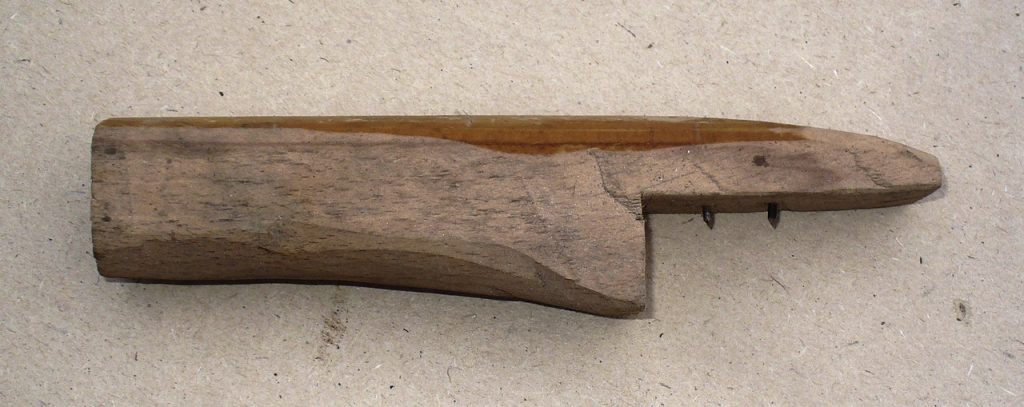
The standard marking gauge carries a single steel pin, used for scribing lines parallel to an edge. The mortise gauge carries two pins — one fixed, one adjustable — for scribing both walls of a mortise simultaneously.
The cutting gauge replaces the pin with a small knife blade, severing fibres cleanly across the grain rather than tearing them, and is preferred for cross-grain work and for marking rebate depths. The panel gauge is a large-format version with a longer beam, extending the range of the tool to wide boards. All share the same fundamental geometry: adjustable fence, fixed beam, scribing point.
The Marking Gauge Today
The marking gauge remains a timeless, essential first tool in every hand-tool joinery and woodworking workshop. Vintage wooden gauges from the 19th century are still in daily use alongside modern precision versions with wheel cutters and micro-adjust fences. No mortise, tenon, rebate, or groove is laid out without one.
Definition
A layout tool consisting of a beam with an adjustable fence and a scribing pin or blade. The fence registers against the reference face of the board while the pin scribes a line parallel to the edge at a set distance. Essential for laying out mortises, tenons, rebates, and any joint requiring parallel lines.
Terminology
| German | Streichmaß |
|---|---|
| English | Marking Gauge / Mortise Gauge / Panel Gauge |
Regional Variants
EN: Marking gauge, Mortise gauge, Panel gauge — DE: Streichmaß, Streichmaßstock, Anreißlehre — FR: Trusquin — NL: Klampijzer — SE: Strykjärn — DK: Strygejern
Professional Users
Joiners, cabinetmakers, furniture makers, carpenters, timber framers
Period / Era
Attested from the 17th century; in continuous use in hand joinery to the present day
Available as an archival print — Heritage Tools Archive Vol. 02 — Joinery Tools