
#14 — Tenon Saw
Tenon Saw — The Enduring Precision Saw for 3 Classic Joinery Joints
The tenon saw is the enduring precision back saw of the joinery workshop — a rigid, fine-toothed blade stiffened along its spine with brass or steel, designed to cut tenon cheeks, tenon shoulders, and dovetail baselines with the repeatable accuracy that hand joinery demands. Where the handsaw cuts freely through timber, the tenon saw cuts to a line, controlled, deliberate, and exact. It is the saw that turns a marked joint into a fitted joint.
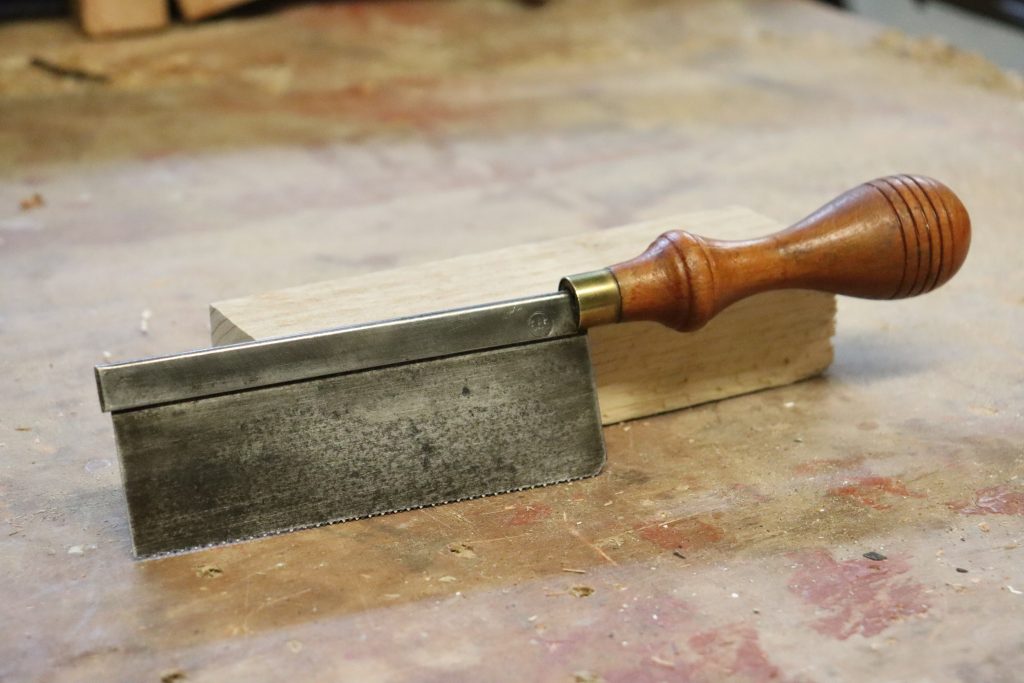
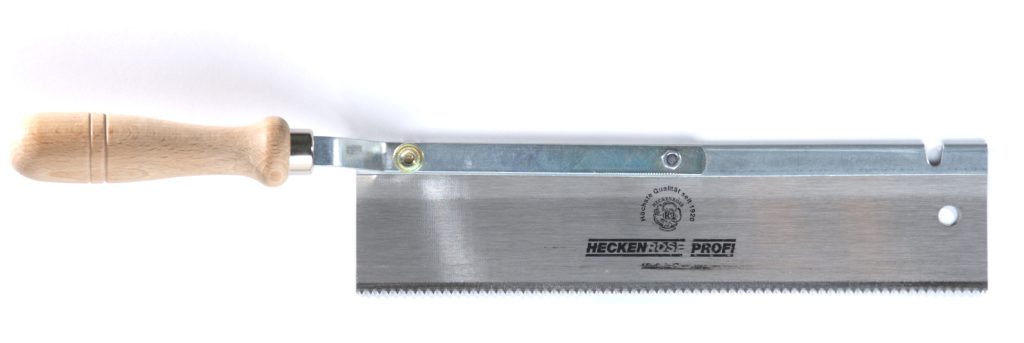
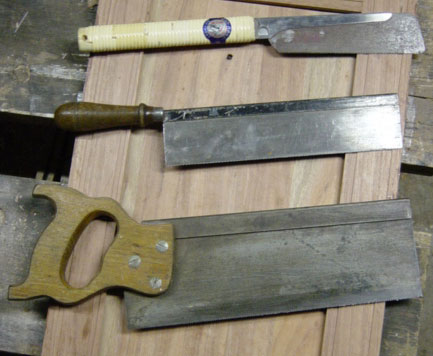
History of the Tenon Saw
Back-stiffened saws have been attested since the 18th century and became the dominant precision saw in joinery workshops from that period onward, displacing earlier approaches to controlled sawing. As documented in Wikipedia’s backsaw article, the tenon saw’s defining feature — the rigid spine clamped or folded over the top edge of the blade — was the engineering solution that made repeatable precision joinery cuts possible by hand.
Sheffield toolmakers refined the tenon saw throughout the 19th century, producing blades in a range of lengths and tooth pitches for different trades: the joiner’s tenon saw, the cabinetmaker’s sash saw, the carcase saw for heavy work. Each was optimised for the joint being cut, but all shared the same principle: a stiffened back preventing the thin blade from deflecting under the pressure of the cut.
How the Tenon Saw Works
The craftsman lays out the tenon using a marking gauge and a marking knife — the gauge scribing the shoulder line, the knife severing the fibres cleanly across the face. The tenon saw is then started with a few gentle back-strokes on the waste side of the line, establishing a kerf that guides subsequent cuts. Cutting proceeds along the cheek, the rigid spine keeping the blade tracking true while the craftsman sights along the layout line.
For the shoulder cuts, the workpiece is repositioned in the vice and the saw is run across the grain to the baseline, again tracking on the waste side. When both cheek cuts and all shoulder cuts are complete, the tenon should slide into its mortise with hand pressure alone — the test of an accurately cut joint. Accuracy here depends entirely on the stiffness of the back and the quality of the layout: the tenon saw does not correct errors, it transfers them faithfully from the layout line to the timber.
The Tenon Saw in 3 Classic Joinery Joints
The mortise-and-tenon joint is the primary application of the tenon saw — the cheek cuts define the tenon’s width and thickness, the shoulder cuts define its length. Every door frame, every chair, every cabinet carcass built by hand relies on accurately cut tenons sawn with the tenon saw. The dovetail joint uses the tenon saw to cut the tails and pins — the saw tracking along the bevel lines laid out with a sliding bevel, producing the angled cuts that interlock under load.
Housing joints
for shelves and dadoes use the tenon saw to cut the shoulder lines before the waste is removed with a chisel or router plane. Three enduring joints, all dependent on the same rugged back saw. See also the Mortise Chisel — No. 13, which chops the mortise that receives the tenon saw’s tenon, and the Marking Gauge — No. 17, which lays out the lines the tenon saw follows.
Tenon Saw Varieties
The standard joiner’s tenon saw runs 250 to 350 mm in blade length with 10 to 14 teeth per inch — a versatile pitch that crosscuts cleanly without being too slow for rip cuts along the cheek. The sash saw, slightly longer and often with a heavier back, was used by joiners cutting window sash and door frame components all day. The carcase saw is shorter and finer, with 12 to 16 teeth per inch, for the cleaner cuts demanded by cabinetwork. The dovetail saw is finer still — 15 to 20 teeth per inch — and is treated separately as No. 15 in this volume. All are back saws; all depend on the same rigid spine for their precision.
The Tenon Saw Today
The tenon saw remains the timeless standard of accuracy in hand-tool joinery. In the modern hand-tool revival, both vintage Sheffield tenon saws and modern precision back saws from specialist makers are in daily use — their rigid backs and sharp teeth unchanged in principle from the tools that furnished every joinery workshop in the 18th and 19th centuries. A sharp tenon saw is the first tool any traditional joiner reaches for at the bench.
Definition
A fine-toothed saw with a rigid brass or steel back that keeps the blade straight under cutting pressure. Used for accurate joinery cuts — tenon cheeks, tenon shoulders, dovetail baselines, and mitre cuts. The back limits depth of cut, making the saw ideal for controlled joinery work.
Terminology
| German | Zapfensäge / Rückensäge |
|---|---|
| English | Tenon Saw / Back Saw / Bench Saw |
Regional Variants
EN: Tenon saw, Back saw, Bench saw, Sash saw — DE: Zapfensäge, Rückensäge, Absetzsäge — FR: Scie à dos, Scie à tenon — NL: Rugsäge — SE: Ryggsåg — DK: Ryggsav
Professional Users
Joiners, cabinetmakers, furniture makers, carpenters, pattern makers
Period / Era
Back-stiffened saws attested from the 18th century; dominant in joinery from 18th century to present
Available as an archival print — Heritage Tools Archive Vol. 02 — Joinery Tools