
#04 – Broadaxe
Broadaxe Timber Hewing — The Rugged Axe That Shaped 5 Centuries of Construction
Broadaxe timber hewing is the rugged ancient craft of squaring round logs into structural beams by hand — using a wide, flat-ground blade with an asymmetric grind that allows the craftsman to work flush to the layout line. Before the sawmill made milled timber widely available, broadaxe timber hewing shaped every barn, bridge, and building across Europe and North America for 5 centuries.
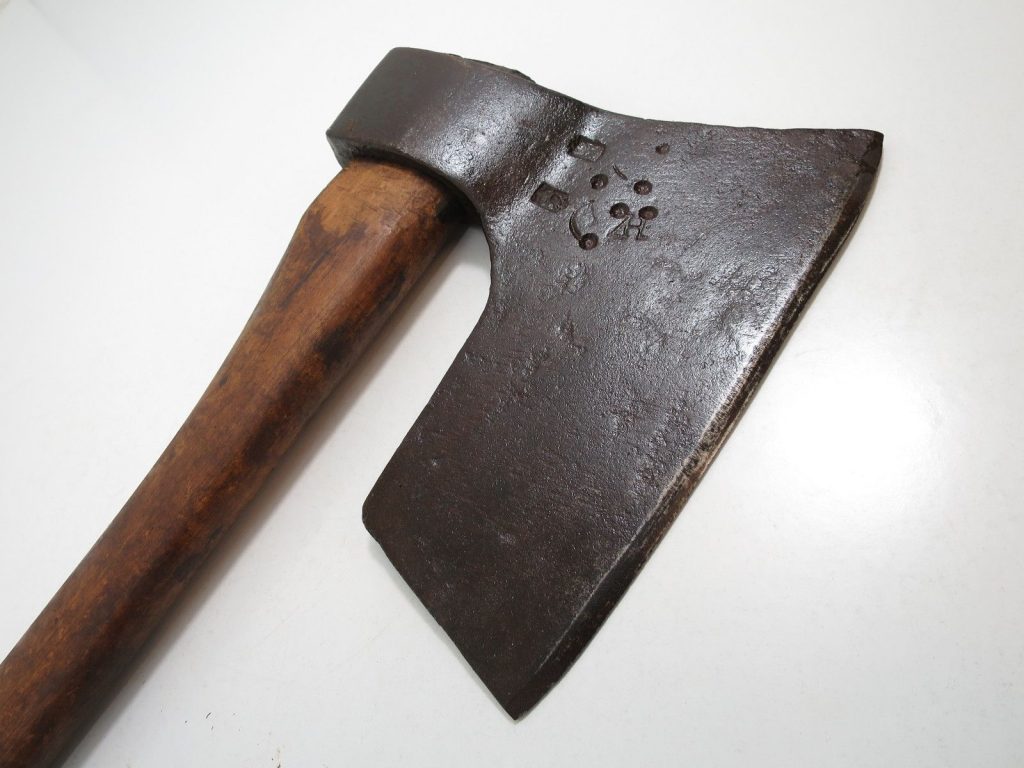
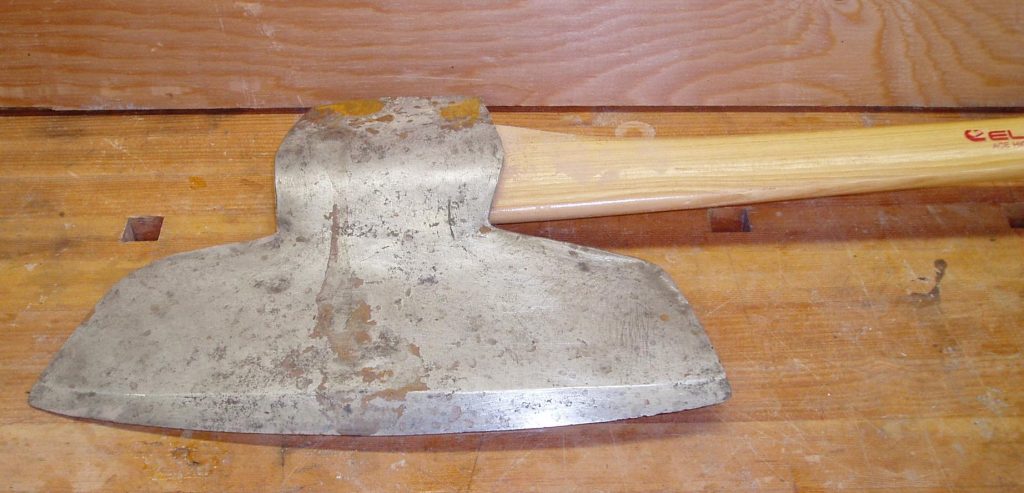
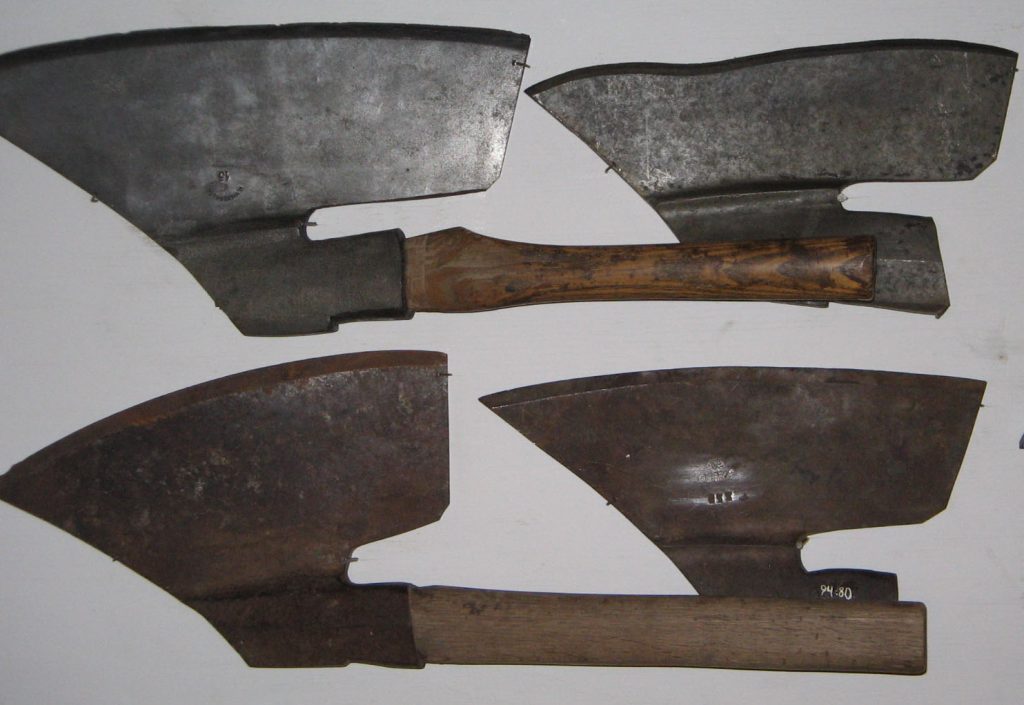
History of Broadaxe Timber Hewing — 5 Centuries of Rugged Construction
Broadaxe timber hewing is ancient in origin and reached peak use between the 16th and 19th centuries in timber framing, shipbuilding, and mill construction. Each hewed beam bears the rugged, characteristic faceted marks of the broadaxe — still visible in historic barns across Europe. As documented in Wikipedia’s broadaxe article, broadaxe timber hewing was the standard method of producing structural timber until industrial sawmills became widespread.
How Broadaxe Timber Hewing Works
The asymmetric grind of the rugged broadaxe is key: one side is flat, allowing the craftsman to hew flush to the chalk line, while the bevelled side guides the cut away from the beam face. The hewer stands beside the log and swings the broadaxe in smooth, angled strokes — removing the waste in controlled chips.
Broadaxe Timber Hewing in Traditional Construction
Timber framing, shipbuilding, and agricultural construction all depended on broadaxe timber hewing before industrial sawmills became widespread. See also Adze — No. 12, the remarkable hollowing tool used alongside the broadaxe in timber framing and shipbuilding.
The Broadaxe Today
Broadaxe timber hewing remains an inspiring practice among timber framers who value the rugged hewed beam — its characteristic axe marks carry the evidence of the hand that shaped it.
Definition
A large axe with a wide, flat-ground blade used to hew logs into squared timber. The asymmetric grind allows the craftsman to work close to the wood surface, producing a flat face. Used before sawmills made milled timber widely available.
Terminology
| German | Breitbeil |
|---|---|
| English | Broadaxe / Broad Axe / Hewing Axe / Side Axe |
Regional Variants
EN: Broadaxe, Broad axe, Hewing axe, Side axe — DE: Breitbeil, Zimmerbeil, Breitaxt — FR: Hache à doler, Doloire — NL: Breekbijl — SE: Bredyxa — DK: Brèdebil
Professional Users
Timber framers, carpenters, shipwrights, millwrights, log builders
Period / Era
Ancient origins; peak use 16th–19th century in timber framing; still used in traditional log building
Image Credits
Aserafin, Wikimedia Commons, CC BY-SA 4.0, commons.wikimedia.org/wiki/File:Topor_ciesielski.jpg
Available as an archival print — Heritage Tools Archive Vol. 01 — Woodcraft